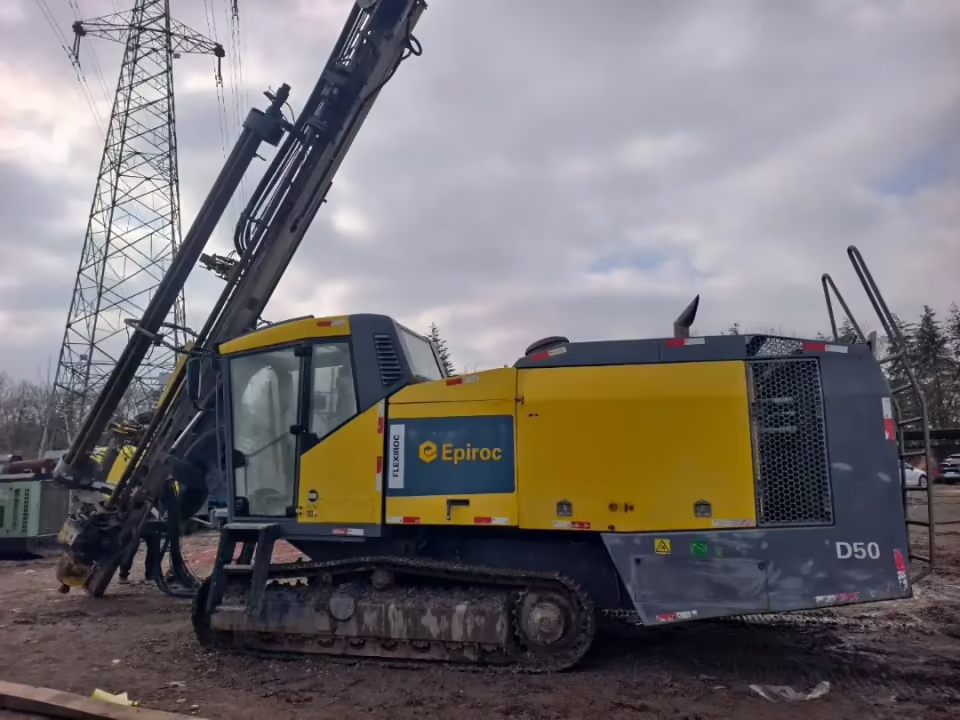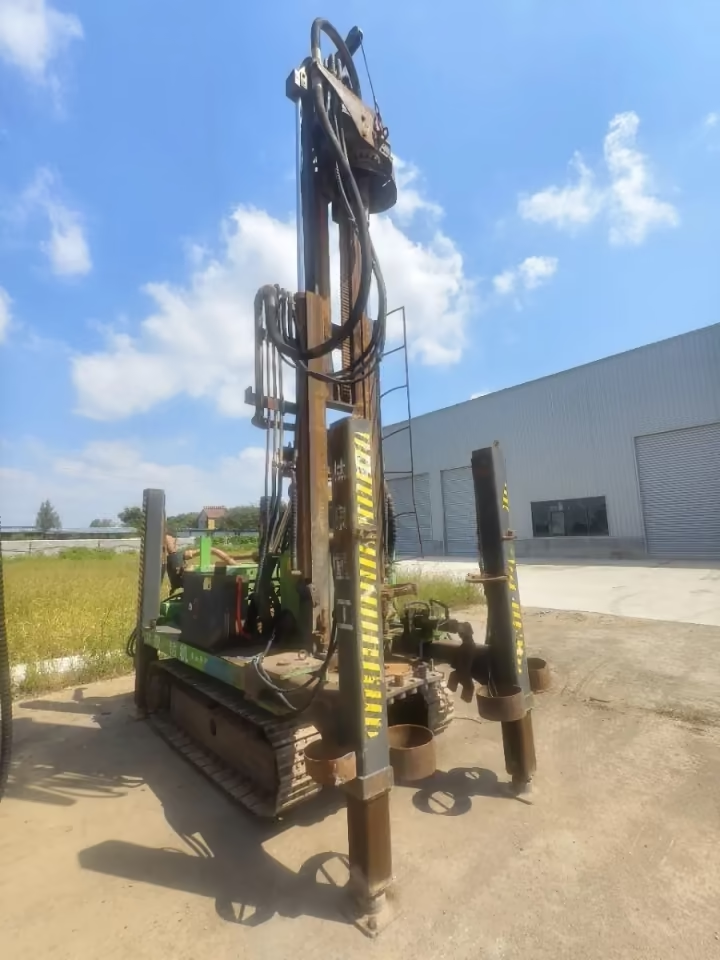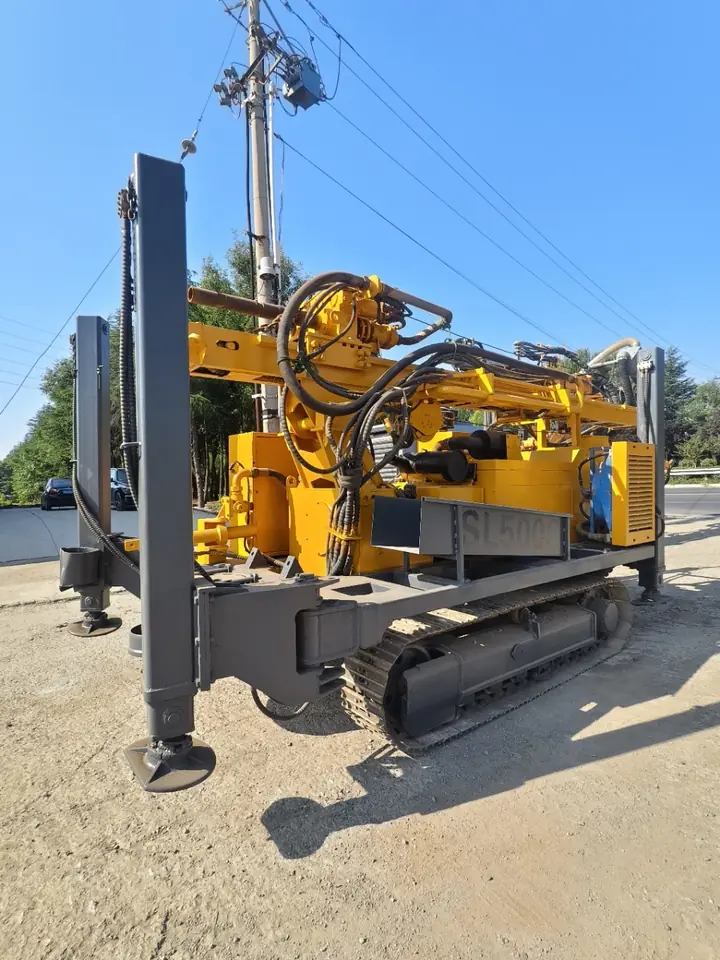
1. Describe the route from unloading point to borehole
Record gateways, bends, bridges, gradients, overhead restrictions and the surface condition along the route. Separate travel on public roads from movement within the worksite because the constraints and responsible approvals differ. A photograph can help explain the setting, but measured clearances and the machine's documented limits are needed for planning. We ask where unloading will occur and how far equipment must travel afterwards. This prevents a comparison focused only on transport width from missing a difficult final approach to the drilling position.
- Supply a route sketch with measured access restrictions.
2. Compare carrier arrangements within documented limits
Crawler and truck-mounted arrangements offer different mobilisation options, but neither is universally better on every site. Assess the exact carrier, travel configuration, ground conditions and manufacturer's operating limits. Do not infer grade capability, stability or road approval from a general category name. A crawler may need a separate transporter between sites; a truck-mounted package still needs a suitable route and operating setup. Include frequency of moves and the distance between jobs in your commercial comparison so transport effort is considered alongside the drilling requirement.
- Compare actual carrier specifications and the project's move pattern.
3. Check working height and the handling envelope
The transport configuration is not the working configuration. Record mast height, raising and lowering space, rod-handling area, operator position and service access using the applicable machine documentation. Include clearances to overhead services and nearby structures in a competent site assessment. Long casing or rods may need more room than the rig's footprint suggests. We request a working-layout drawing where access is restricted so the quote reflects a usable equipment arrangement, not merely a machine that can pass through the gate.
- Review the complete working envelope with the responsible site team.
4. Assess ground support and setup requirements
The contractor should assess bearing conditions, level working areas, stabiliser or track support and any temporary works required by the selected machine. Wet ground, fill and slopes deserve site-specific attention. Use the manufacturer's setup instructions and an appropriate engineering assessment; a catalogue weight alone is not a ground-support design. Ask for the machine's actual configuration and dimensions, including attachments. We keep these requirements in the mobilisation brief so any preparation costs are visible when comparing different equipment options.
- Obtain a site-specific setup and ground-support assessment.
5. Plan supporting equipment and repeated moves
Add the compressor or pump, rods, casing, water supply, fuel arrangements and support vehicle to the plan. Consider how hoses and supply routes change when the drilling position moves. A rig with convenient travel may still be constrained by its supporting package. Compare loading, unloading, setup and relocation time as project inputs rather than assuming a fixed productivity benefit from the carrier type. The same complete-package view helps you identify separate freight loads and equipment that must remain accessible during drilling.
- Map support equipment and the sequence for each relocation.
6. Send an access brief with the machine inquiry
Send us the stock ID or preferred machine type, hole requirements, route restrictions, site photographs and a measured working layout. Add destination, frequency of moves and the support equipment you already have. We can discuss a unit-specific package and request the appropriate dimensions for your shortlist. Our shipping guide covers transport measurements and loading documentation; this guide covers the route and working area after arrival. Using both keeps the commercial scope clear without treating a general product category as proof of suitability for your site.
- Combine the access brief with your drilling and transport requirements.
Topic decision table: Crawler or Truck-Mounted Drill Rig: Match the Machine to Site Access
| Topic checkpoint | Buyer action | Evidence-based explanation |
|---|---|---|
| 1. Describe the route from unloading point to borehole | Supply a route sketch with measured access restrictions. | Record gateways, bends, bridges, gradients, overhead restrictions and the surface condition along the route. |
| 2. Compare carrier arrangements within documented limits | Compare actual carrier specifications and the project's move pattern. | Crawler and truck-mounted arrangements offer different mobilisation options, but neither is universally better on every site. |
| 3. Check working height and the handling envelope | Review the complete working envelope with the responsible site team. | The transport configuration is not the working configuration. |
| 4. Assess ground support and setup requirements | Obtain a site-specific setup and ground-support assessment. | The contractor should assess bearing conditions, level working areas, stabiliser or track support and any temporary works required by the selected machine. |
Apply this guide to current inventory
Editorial details and evidence notes
How should the evidence be interpreted?
| Evidence type | What it can support | What it cannot prove |
|---|---|---|
| Official or manufacturer source | The cited family, standard or regulatory statement | The configuration or condition of a listed used unit |
| Published inventory record | Stock ID, supplied fields and linked listing photos | Current availability, hidden condition or included scope |
| Unit inspection evidence | Serial-specific observations within the agreed test scope | Performance outside the tested conditions |
Questions about using this guide
Does this guide prove that a listed machine has the feature or compliance discussed?
No. The guide explains a verification method. Confirm the exact stock ID, serial identity, installed configuration and destination rules before relying on it.
What should a buyer do before requesting a final quote?
Send the stock ID, project requirement, destination and requested inspection scope, then ask for current machine-specific evidence.