1. Define the finished well before comparing rigs
Write down the target depth, finished casing diameter, proposed borehole diameter and known ground sequence. These are different measurements: the hole must accommodate the planned completion, not merely accept a drill bit. Add water-level information and nearby drilling logs where available. Let the responsible drilling contractor or hydrogeologist assess the well design; a machine quotation cannot guarantee water yield or replace that assessment. State which requirements are fixed and which still need site information.
- Send a borehole brief with units, ground information and destination.
2. Choose the drilling method for the formation
Air-powered DTH equipment and mud rotary systems solve different drilling problems. Competent rock, loose overburden and fractured intervals may require different tools and borehole-support arrangements within one well. The NGWA manual distinguishes rotary and rotary-percussion equipment, while Lone Star explains method-specific rig packages. Ask which method the particular used rig can support with its installed equipment. Do not assume that every crawler rig is DTH or that an optional pump is included.
- List the method and supporting equipment for each expected formation.
3. Compare working capability, not a depth badge
Request the applicable model documentation and reconcile it with the machine's current plates and attachments. Compare pullback, feed travel, rotary torque and speed, rod handling and the drilling-tool connections for the intended work. A brochure describes a configuration and operating assumptions; it does not prove the condition of a used machine. If a configuration has changed, obtain the component identification and the corresponding limits before treating it as equivalent to the original package.
- Match each required function to current component evidence.
4. Price the complete circulation and tooling package
Build a separate list for drill rods, hammer or rotary bits, adapters, casing tools, lubrication, hoses and the air compressor or mud pump. Record quantities, connection types and whether each item is supplied, buyer-owned or separately quoted. For compressed air, keep pressure and flow paired at one operating condition and check the actual hammer requirement. A compressor's maximum pressure combined with its maximum flow from another setting is not a valid package rating.
- Compare delivered packages on the same inclusion list.
5. Check access, transport and local support
A rig that fits the drilling task may still be difficult to mobilise. Record road and site access, carrier restrictions, loading arrangements, working space and transport dimensions in the actual shipping configuration. Include the compressor, water supply, rods and support vehicle in that plan. Ask local service providers about the installed engine, hydraulic and drilling components before committing. Obtain route and lifting assessments from the responsible specialists rather than relying on a generic machine photo.
- Confirm access and support for the whole drilling system.
6. Start with our two water-well records
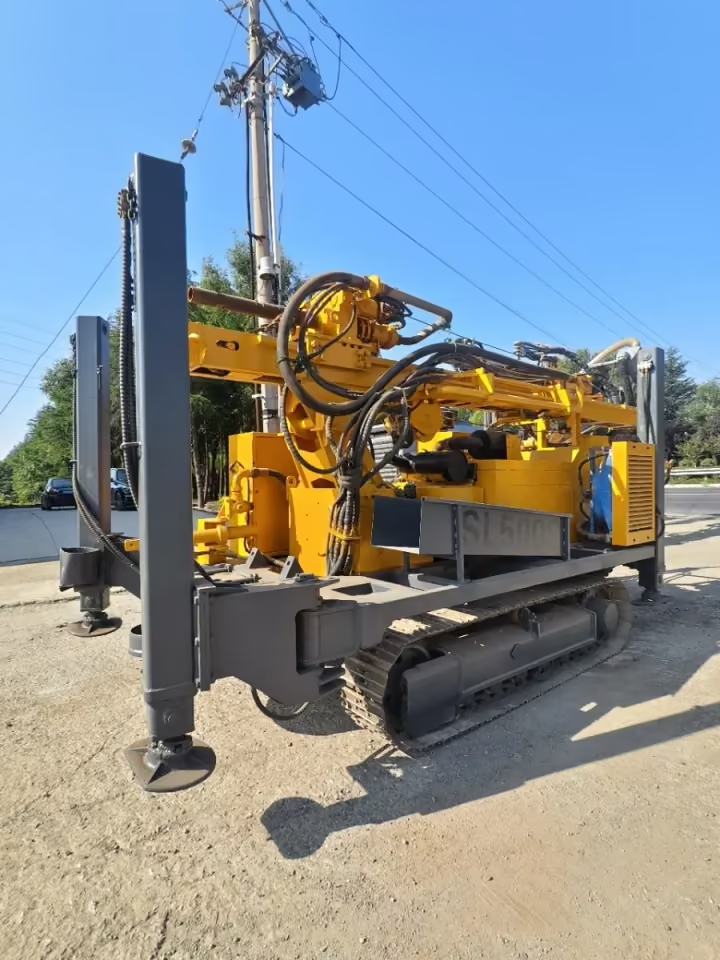
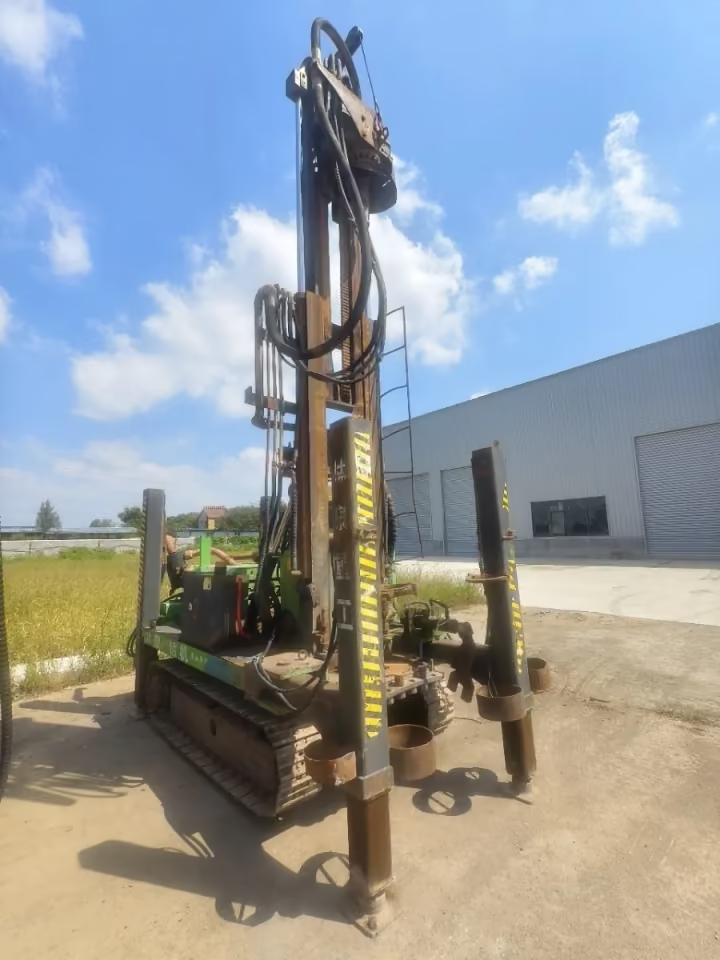
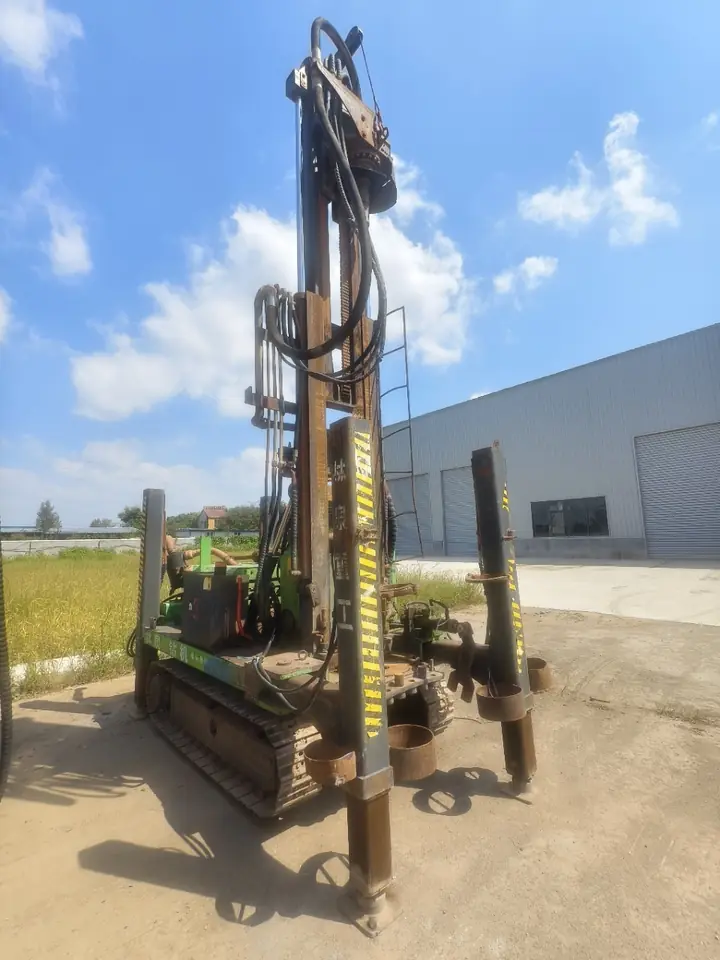
We list Linquan LQ-260 as CR-062 and Zhengyuan SL500S as CR-069. Open their individual photographs and records before requesting a comparison. The labels LQ-260 and SL500S do not establish achievable drilling depth, installed tooling or current mechanical condition. Contact Leo for current availability. Ask Leo to relate the actual configuration, included tools and current evidence to your borehole brief; this guide does not prove that either machine meets a particular project specification.
- Use CR-062 or CR-069 in the request so the reply identifies the exact machine.
7. Turn the shortlist into an acceptance plan
Before purchase, agree the identity checks, configuration list, inspection scope and any safe functional demonstration that the site can support. Record what the demonstration measures, its conditions and what remains outside its scope. Separate the equipment price, agreed repairs, tools, loading and freight. Your editable inquiry should include the selected stock ID, depth, diameter, geology, destination and required delivery window. Review the resulting unit-specific quotation and evidence before deciding, rather than buying from a model label alone.
- Request a scoped inspection and quotation against the project brief.
Topic decision table: How to Choose a Used Water Well Drilling Rig
| Topic checkpoint | Buyer action | Evidence-based explanation |
|---|---|---|
| 1. Define the finished well before comparing rigs | Send a borehole brief with units, ground information and destination. | Write down the target depth, finished casing diameter, proposed borehole diameter and known ground sequence. |
| 2. Choose the drilling method for the formation | List the method and supporting equipment for each expected formation. | Air-powered DTH equipment and mud rotary systems solve different drilling problems. |
| 3. Compare working capability, not a depth badge | Match each required function to current component evidence. | Request the applicable model documentation and reconcile it with the machine's current plates and attachments. |
| 4. Price the complete circulation and tooling package | Compare delivered packages on the same inclusion list. | Build a separate list for drill rods, hammer or rotary bits, adapters, casing tools, lubrication, hoses and the air compressor or mud pump. |
Apply this guide to current inventory
- Water Well Drilling Rigs →
- Drilling Rigs →
- Air Compressors →
- Inspection →
- Export planning for Indonesia, the Middle East and Africa →
- Linquan LQ-260 · CR-062 →
- Zhengyuan SL500S · CR-069 →
- Air vs Mud Rotary Drilling: What Should You Buy? →
- DTH Hammer and Bit Selection for a Used Drilling Rig →
- Used Drilling Rig Inspection Checklist: 12 Evidence-Based Checks Before You Buy →
Editorial details and evidence notes
How should the evidence be interpreted?
| Evidence type | What it can support | What it cannot prove |
|---|---|---|
| Official or manufacturer source | The cited family, standard or regulatory statement | The configuration or condition of a listed used unit |
| Published inventory record | Stock ID, supplied fields and linked listing photos | Current availability, hidden condition or included scope |
| Unit inspection evidence | Serial-specific observations within the agreed test scope | Performance outside the tested conditions |
Questions about using this guide
Does this guide prove that a listed machine has the feature or compliance discussed?
No. The guide explains a verification method. Confirm the exact stock ID, serial identity, installed configuration and destination rules before relying on it.
What should a buyer do before requesting a final quote?
Send the stock ID, project requirement, destination and requested inspection scope, then ask for current machine-specific evidence.