1. Start with an evidence hierarchy
Label every important statement by source. A manufacturer brochure describes how a model could be configured when new, not what remains on one used unit. A seller statement is not independent proof. A dated inspection records only what was visible or testable under stated conditions. Mark each item as verified from a plate or document, observed during testing, reported but unverified, or unknown. Epiroc's RigScan material supports a zone-by-zone process, while Geoprobe advises buyers to evaluate used equipment before purchase; neither source establishes the condition of a unit in our inventory.
- Manufacturer specification: model-level reference
- Unit plate or document: traceable evidence
- Observed test: limited to its date and conditions
- Seller statement or missing data: disclose clearly
2. Check 1 — prove the identity of the exact unit
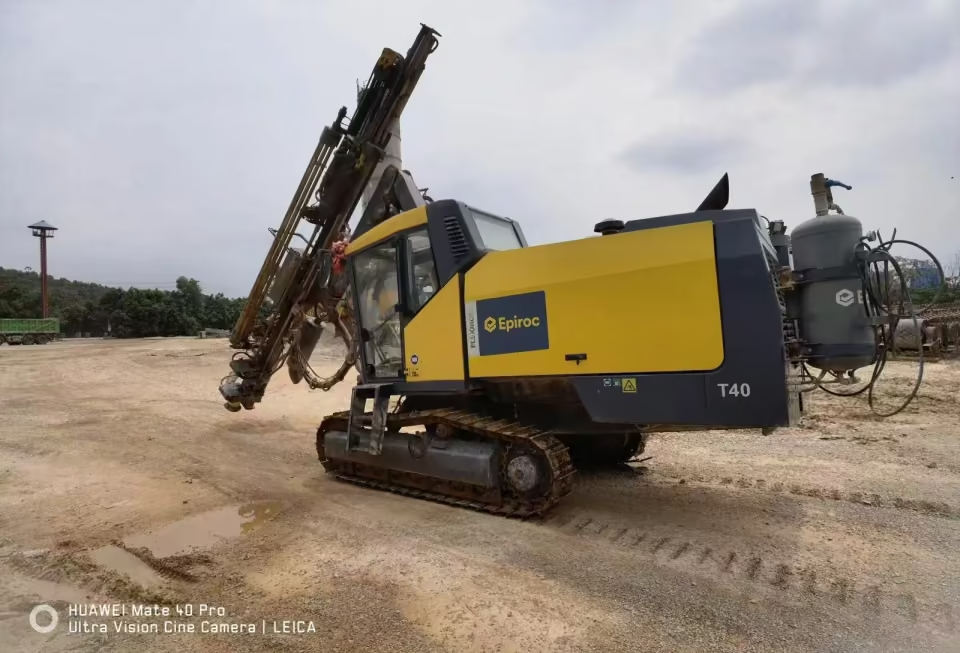
Request readable photographs of the main machine plate, engine plate and the plate for the rock drill, rotary head or integrated compressor where applicable. Reconcile serial numbers, model and stock ID with the quotation, videos and inspection report. Ask for a current continuous walk-around in which the stock ID and machine appear together. If a plate is missing, damaged or inconsistent, keep identity unresolved until documentary evidence explains the difference; do not describe ownership, location or legal title as verified without reviewing the relevant records.
- Main model and serial plate
- Engine and drilling-component plates
- Stock ID visible in a current continuous video
- Consistent identifiers across quotation and report
3. Checks 2 and 3 — reconcile configuration, hours and history
Check the present configuration because engines, rock drills, controllers and feeds may have been replaced. Compare current plates and options with the applicable manufacturer documentation, and record modifications or missing guards. Treat every hour figure as a dated reading rather than automatic proof of lifetime use. Photograph engine, drilling, percussion and controller counters; compare them with invoices, telematics exports and replacement records when available. A low reading or clean display is not proof of total hours, and an unavailable history must stay disclosed as unavailable.
- Current configuration versus original specification
- All available hour counters and record dates
- Service invoices and telematics evidence
- Component replacements and modifications
4. Checks 4, 5 and 6 — cold start, engine and hydraulics
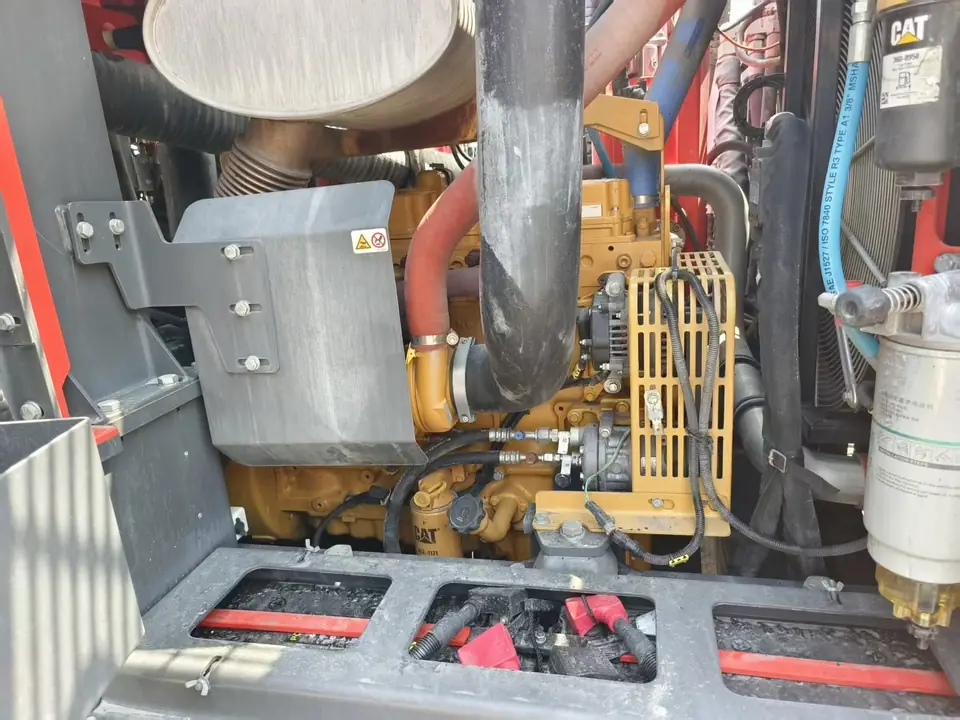
A qualified operator should perform the cold start under the site's safety procedure. Record warning lights, starting behaviour, exhaust appearance, sound and visible leaks, then continue through warm operation and note temperature and fault codes. Inspect coolers, hoses, fluids where safely accessible, intake and exhaust condition, and any emissions equipment relevant to the destination. At operating temperature, cycle fitted boom, mast, feed, leveling, rotation and rod-handling functions. Look for drift, delay, chatter, overheating, hose abrasion and leakage. Instrumented pressure or flow diagnosis belongs to competent personnel using the correct service data.
- Cold start and warm operating record
- Cooling, intake, exhaust and fluids
- Fault codes and warning indicators
- Hydraulic functions at operating temperature
5. Checks 7 and 8 — test drilling and the air package
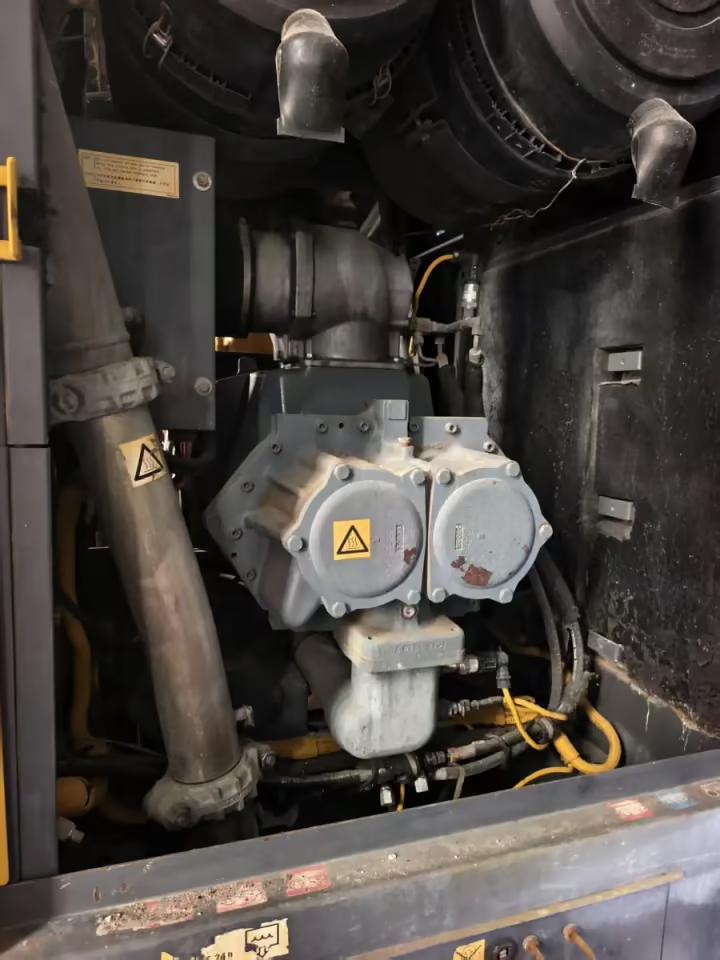
Agree whether the rock drill, rotary head or DTH system can be tested without load, against controlled resistance or while drilling. Record tool, rod, settings, duration and ground condition. Observe feed, rotation, percussion where fitted, flushing, lubrication, vibration and leaks without converting a short test into a production guarantee. For an integrated or supplied compressor, record its airend and engine plates, controller, rated pressure-flow data and a safe load test at an identified operating point. Final suitability for a DTH hammer still requires the current hammer chart and real site conditions.
- Test method, load, duration and operator
- Drilling-system response and leakage
- Compressor identity and stable load evidence
- No unsupported penetration or fuel claim
6. Checks 9 and 10 — mast, structure and undercarriage
View the mast from several directions for twist or deformation. Inspect welds, pivots, pins, bushings, feed chains or cables, guides, hose routing and rod handling. Record whether repairs are documented or of unknown history; fresh paint is not proof of structural condition. Check track shoes, chains, rollers, idlers, sprockets, tension, final-drive leakage, straight travel and carrier frame where safe. Report wear percentages only when a recognized measurement method and reference limits are used; otherwise publish clear photographs and measurements.
- Mast alignment, welds and feed parts
- Rod handler and dust collector if fitted
- Track chain, rollers, idlers and sprockets
- Frame, final drives and travel test
7. Check 11 — safety and project compatibility
Inspect fitted steps, handrails, guards, emergency stops, alarms, lights, fire-suppression components, cab glass, restraint and interlocks according to manufacturer procedures and site rules. Missing or bypassed safety systems must be documented and addressed before operation. Then compare the verified configuration with drilling method, hole diameter and depth, rod length, rock, bench access, slopes, altitude, temperature, dust control, parts support and operator capability. Similar model names do not establish suitability; obtain OEM or qualified engineering review when the application is outside published data.
- Access, guarding, emergency stops and alarms
- Cab, visibility and fitted suppression
- Hole range, method and ground conditions
- Destination rules, service and operator capability
8. Check 12 — contract the evidence and transport scope
The quotation should identify the serial-numbered unit, evidence date, known defects, inspection limits, promised repairs, included tools, exclusions and Incoterm. For third-party inspection, define the test scope, report ownership and treatment of untested systems. Confirm transport dimensions, weight, removed parts, lifting assumptions, cleaning and dangerous-goods issues before accepting freight. A comparison sheet should score evidence completeness separately from condition and price. Unknowns do not automatically reject a machine, but they should change the inspection budget, contingency and contract before payment.
- Exact unit, evidence date and limitations
- Repairs, inclusions and acceptance method
- Dimensions, weight, dismantling and loading
- Incoterm, payment milestones and discrepancy process
9. Apply the checklist to actual listing evidence
The examples below show how to use the supplied records on this site. They are document and photo checks, not completed inspections or proof of current availability. Follow each stock ID to the images and the remaining unit-specific questions.
- Keep identity, counter evidence and demonstrated condition as separate decisions.
| Stock and machine | Evidence already linked | Still needed before purchase |
|---|---|---|
| CR-006 · 2015 Sandvik DX700 | DX700 nameplate and 3,419 h meter photo | Installed engine/rock-drill identities, current test and counter history |
| CR-007 · 2016 PowerROC D45 | PowerROC D45 plate and 1,667.4 h meter photo | Exact engine, drilling configuration and current operating evidence |
| CR-008 · 2016 FlexiROC D50-10SP | FlexiROC D50-10SP nameplate; 24,100 kg gross weight | Current meter, engine plate, service history and measured transport dimensions |
Topic decision table: Used Drilling Rig Inspection Checklist: 12 Evidence-Based Checks Before You Buy
| Topic checkpoint | Buyer action | Evidence-based explanation |
|---|---|---|
| Identify the unit | Stock ID and full machine plate | Reconcile identifiers with the quotation and current machine |
| Qualify the hours | Dated counter images and service history | Separate photographed readings from reported hours and lifetime use |
| Test the fitted systems | Agreed test scope and recorded conditions | List untested functions and unresolved defects in writing |
| Define what is sold | Accessory list and transport measurements | Agree repairs, exclusions and acceptance before payment |
Apply this guide to current inventory
- Used Inventory →
- Inspection →
- Export planning for Indonesia, the Middle East and Africa →
- Drilling Rigs →
- Air Compressors →
- Sandvik DX700 · used-rig records →
- Sandvik DX800 · used-rig records →
- Sandvik DP1100 — CR-005 · used-rig records →
- Atlas Copco D45 · used-rig records →
- Atlas Copco D50 · used-rig records →
- Atlas Copco D55 · used-rig records →
- Atlas Copco T35 · used-rig records →
- Atlas Copco T40 · used-rig records →
- How to Size a Portable Air Compressor for DTH Drilling: Pressure, Flow and Site Conditions →
- How to Calculate the Real Cost per Drilled Metre →
Editorial details and evidence notes
How should the evidence be interpreted?
| Evidence type | What it can support | What it cannot prove |
|---|---|---|
| Official or manufacturer source | The cited family, standard or regulatory statement | The configuration or condition of a listed used unit |
| Published inventory record | Stock ID, supplied fields and linked listing photos | Current availability, hidden condition or included scope |
| Unit inspection evidence | Serial-specific observations within the agreed test scope | Performance outside the tested conditions |
Questions about using this guide
Does this guide prove that a listed machine has the feature or compliance discussed?
No. The guide explains a verification method. Confirm the exact stock ID, serial identity, installed configuration and destination rules before relying on it.
What should a buyer do before requesting a final quote?
Send the stock ID, project requirement, destination and requested inspection scope, then ask for current machine-specific evidence.