1. Define the drilling duty first
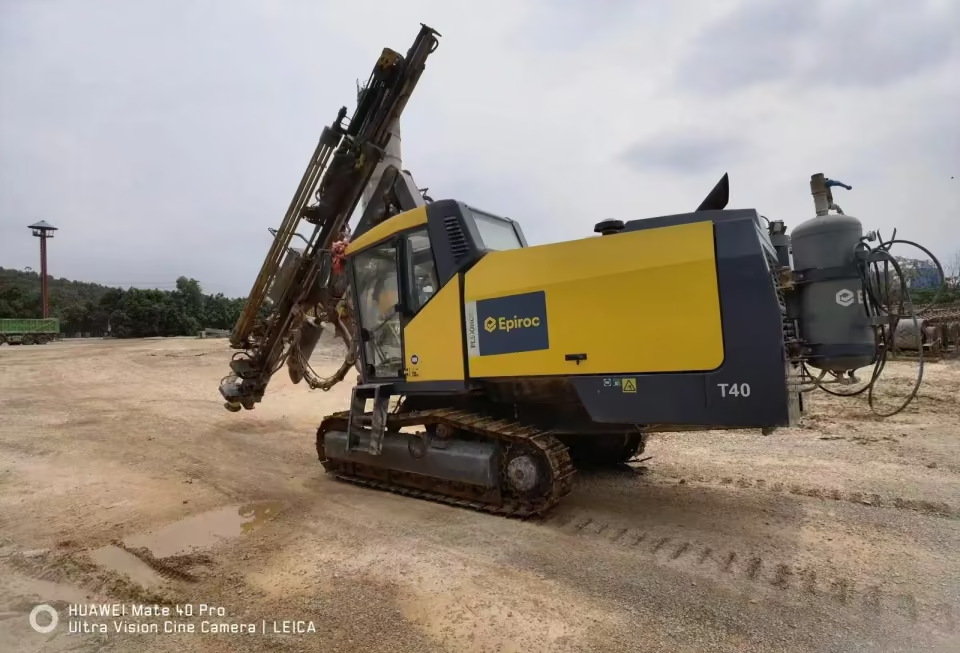
Prepare a duty sheet with target hole diameter, depth, orientation, rock, expected fractures or water, elevation, temperature, drilling method and production schedule. List whether air also feeds foam, water injection, dust control or auxiliary tools. Confirm that the rig accepts the selected rod, hammer, bit and air connection, and check rotation, feed, pullback, mast and maximum-pressure limits. A manufacturer brochure is model-level guidance; it does not prove which options remain on one used machine.
- Hole geometry and production target
- Rock, fractures and expected water
- Elevation and temperature range
- Rig limits and simultaneous air consumers
2. Select the exact hammer and chart
Choose bit diameter and shank, then identify the exact hammer model and execution. Nominal size alone is insufficient because designs can have different pressure ranges and air demand. Use the current manufacturer chart to read airflow at the intended working pressure, and record its edition, units and reference conditions. Mincon states that its charts use defined atmospheric conditions and that altitude increases demand, so the plotted value is a starting point rather than a job-site guarantee.
- Exact hammer model and execution
- Bit diameter and shank
- Working-pressure range
- Air demand at the selected pressure
3. Separate pressure from airflow
Pressure and flow are related but not interchangeable. Within the permitted range, pressure supports the pneumatic impact cycle, while air volume operates the hammer and carries cuttings through the annulus. A compressor can advertise high maximum pressure yet deliver too little flow at that pressure. Compare pressure and free-air delivery at the same operating point. For a variable-pressure compressor, use the full curve or table rather than pairing the highest pressure from one row with the highest flow from another.
- Required hammer pressure
- Required airflow at that pressure
- Compressor flow-pressure curve
- No mixing of incompatible headline ratings
4. Account for the complete air path
Air passes through valves, couplings, hose, swivels and drill pipe before reaching the hammer. Restrictions create pressure loss. Atlas Copco's Compressed Air Manual explains how internal diameter, length, flow and fittings affect pressure drop and says flexible hoses and couplings must be included. Hole cleaning also depends on returning air through the annular space and on cuttings, depth and water. There is no responsible universal margin: document the proposed air path and ask the hammer or tool supplier to review it.
- Hose and drill-pipe internal diameter
- Total length, couplings and restrictions
- Hole-to-string annular area
- Cuttings, water and depth
5. Correct for altitude, heat and engine capability
Lower inlet pressure at altitude changes compressor pressure ratio and can affect capacity, power and cooling; diesel engines also receive less oxygen. Atlas Copco advises considering ambient pressure, temperature, humidity, coolant temperature, compressor type and power source. Use the manufacturer's derating information instead of an improvised percentage. High temperature, dirty coolers or poor ventilation can limit sustained output, while cold conditions introduce starting, lubricant and condensate issues. Verify the worst expected environment and continuous operating point.
- Elevation or measured ambient pressure
- Temperature and humidity
- Engine and compressor derating
- Cooling and continuous-duty limits
6. Show secondary demand and contingency
List every device that may consume air simultaneously and decide whether it runs during drilling. Keep hammer demand, calculated line loss, auxiliary demand and contingency as separate entries rather than hiding uncertainty in one unexplained factor. More compressor is not automatically better: oversizing can add purchase cost, transport weight and fuel use, while undersizing can impair hammer operation and cleaning. Compare alternatives using expected cost or fuel per accepted metre under stated conditions, not hourly fuel alone or an unsupported production promise.
- Hammer demand
- Air-path losses
- Simultaneous auxiliary demand
- Documented contingency and cost assumption
7. Verify the actual used compressor
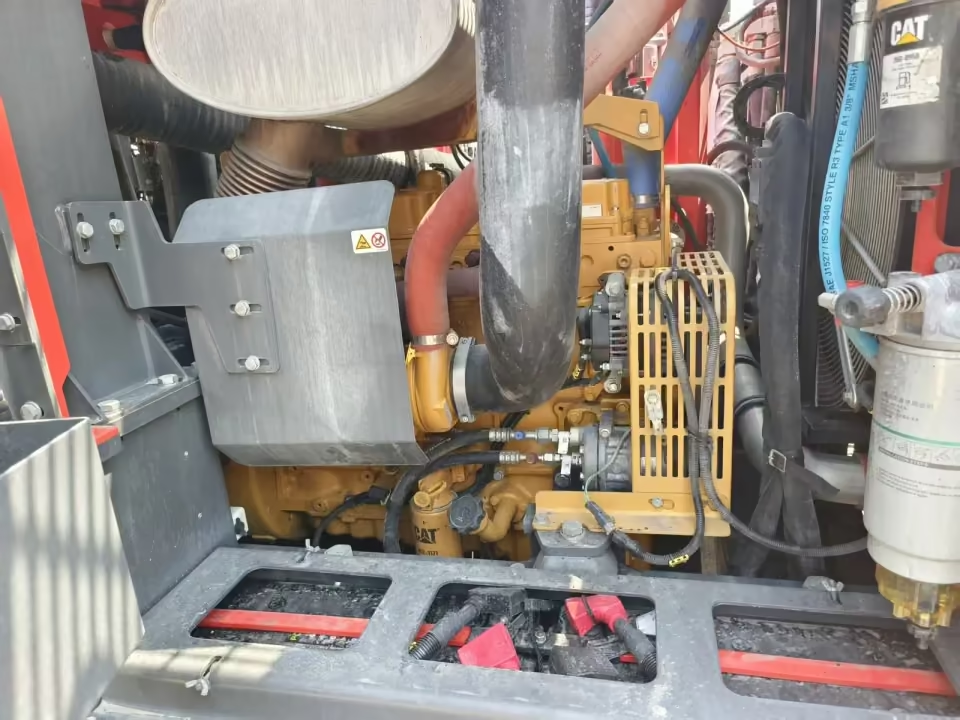
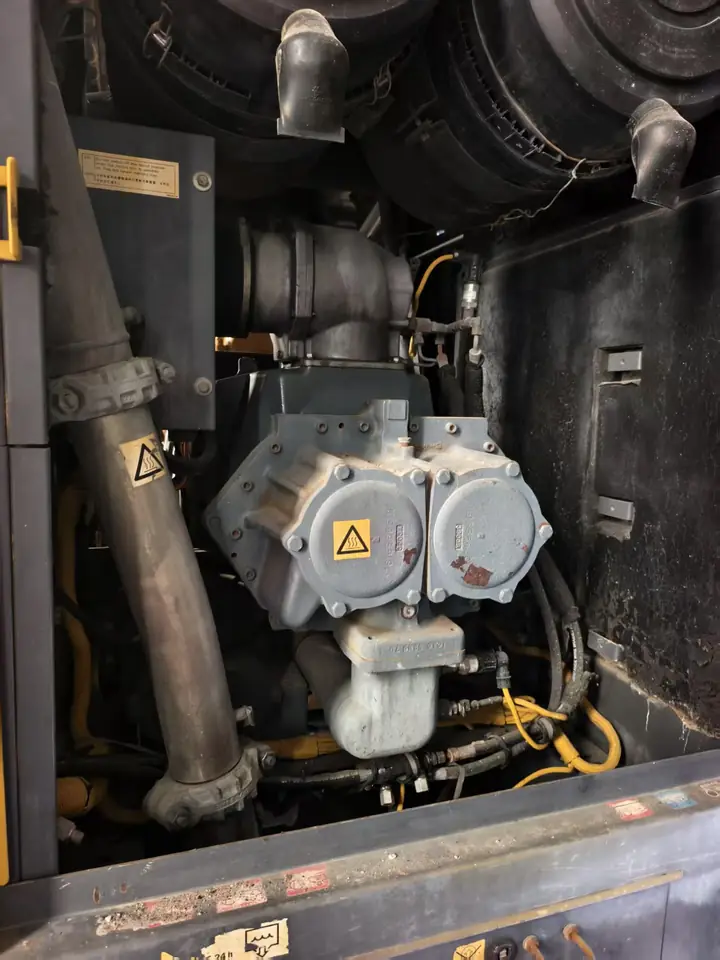
Photograph the compressor, airend and engine plates and reconcile them with the controller and listing. Record pressure, free-air delivery, power, hours and the date of each reading. Request service history for oil, filters, separator, valves, cooling and airend work; missing records remain unavailable, not assumed. Ask qualified personnel for a documented load test showing ambient conditions, selected pressure, stabilized duration, delivered output where measured, temperatures, warnings, smoke and leaks. An idle video does not prove compressor capacity, and a short test does not guarantee future reliability.
- Machine, engine and airend identity
- Service and repair history
- Documented load-test conditions
- Warnings, leaks and stabilized output
8. Produce a matching sheet before quotation
Name the rig, hammer, bit, rods, compressor, hose and site conditions on one sheet. Attach the hammer chart and compressor data used, and label each input as manufacturer data, observed unit evidence, buyer assumption or unresolved. Seek confirmation from the hammer maker, tool supplier or qualified drilling engineer before purchase. When contacting the dealer, send this duty sheet and stock ID so unit-specific data, additional tests and included equipment can be confirmed. This article does not confirm availability, performance or suitability of a current listing.
- One rig-hammer-compressor duty sheet
- Source and date for every value
- Open questions assigned for resolution
- Unit-specific confirmation before payment
9. Use a pressure-flow decision sheet for a listed compressor
For CR-004, the listing includes an XRHS836CD nameplate and a meter image, but the required pressure-flow pair and a current load-test record are not confirmed. Keep the sizing decision open until those data can be compared with the exact hammer chart. CR-025 has a separate model-identity conflict and cannot substitute its controller label for CR-004's data.
- An unresolved operating point means the compressor is a candidate for verification, not a confirmed match.
| Input | Required evidence | Decision if absent |
|---|---|---|
| Exact hammer and working pressure | Hammer model, bit and manufacturer air-consumption chart | Do not choose a compressor from nominal hammer size alone |
| Compressor airflow at that pressure | Exact model/configuration data, units and reference conditions | Do not infer output from 400, 600 or 836 |
| Site and air path | Elevation, temperature, hose/pipe dimensions and simultaneous air demand | Obtain the relevant derating and loss assessment |
| Actual used-unit performance | Dated load test identifying operating point and measured output where available | Do not treat an idle video or nameplate as a performance test |
A nameplate example: Atlas Copco XRHS666 C · CR-057
CR-057 is listed as an Atlas Copco XRHS666 C. Its photographed nameplate records 18.6 m³/min @ 20 bar. This is a nameplate rating, not a current load-test result. Compare the exact hammer's air demand and site conditions, then confirm the used unit's tested output before selecting the package.
- Use stock ID CR-057 when requesting a load test for this machine.
| Stock and machine | Nameplate rating | Scope |
|---|---|---|
| CR-057 · Atlas Copco XRHS666 C | 18.6 m³/min @ 20 bar | Rated values on the supplied plate; current performance requires a load test. |
Topic decision table: How to Size a Portable Air Compressor for DTH Drilling: Pressure, Flow and Site Conditions
| Topic checkpoint | Buyer action | Evidence-based explanation |
|---|---|---|
| Select hammer demand | Exact manufacturer's chart | Read airflow at the intended working pressure |
| Compare compressor output | Paired pressure and free-air delivery | Keep units and reference conditions consistent |
| Apply site conditions | Air path, elevation and temperature | Use supported loss and derating information |
| Verify the used machine | Unit identity and documented load test | Leave suitability unconfirmed until the evidence matches the duty |
Apply this guide to current inventory
- Used Inventory →
- Inspection →
- Export planning for Indonesia, the Middle East and Africa →
- Drilling Rigs →
- Air Compressors →
- Sandvik DX700 · used-rig records →
- Sandvik DX800 · used-rig records →
- Sandvik DP1100 — CR-005 · used-rig records →
- Atlas Copco D45 · used-rig records →
- Atlas Copco D50 · used-rig records →
- Atlas Copco D55 · used-rig records →
- Atlas Copco T35 · used-rig records →
- Atlas Copco T40 · used-rig records →
- Used Drilling Rig Inspection Checklist: 12 Evidence-Based Checks Before You Buy →
- How to Calculate the Real Cost per Drilled Metre →
Editorial details and evidence notes
How should the evidence be interpreted?
| Evidence type | What it can support | What it cannot prove |
|---|---|---|
| Official or manufacturer source | The cited family, standard or regulatory statement | The configuration or condition of a listed used unit |
| Published inventory record | Stock ID, supplied fields and linked listing photos | Current availability, hidden condition or included scope |
| Unit inspection evidence | Serial-specific observations within the agreed test scope | Performance outside the tested conditions |
Questions about using this guide
Does this guide prove that a listed machine has the feature or compliance discussed?
No. The guide explains a verification method. Confirm the exact stock ID, serial identity, installed configuration and destination rules before relying on it.
What should a buyer do before requesting a final quote?
Send the stock ID, project requirement, destination and requested inspection scope, then ask for current machine-specific evidence.