1. Identify the actual drilling system
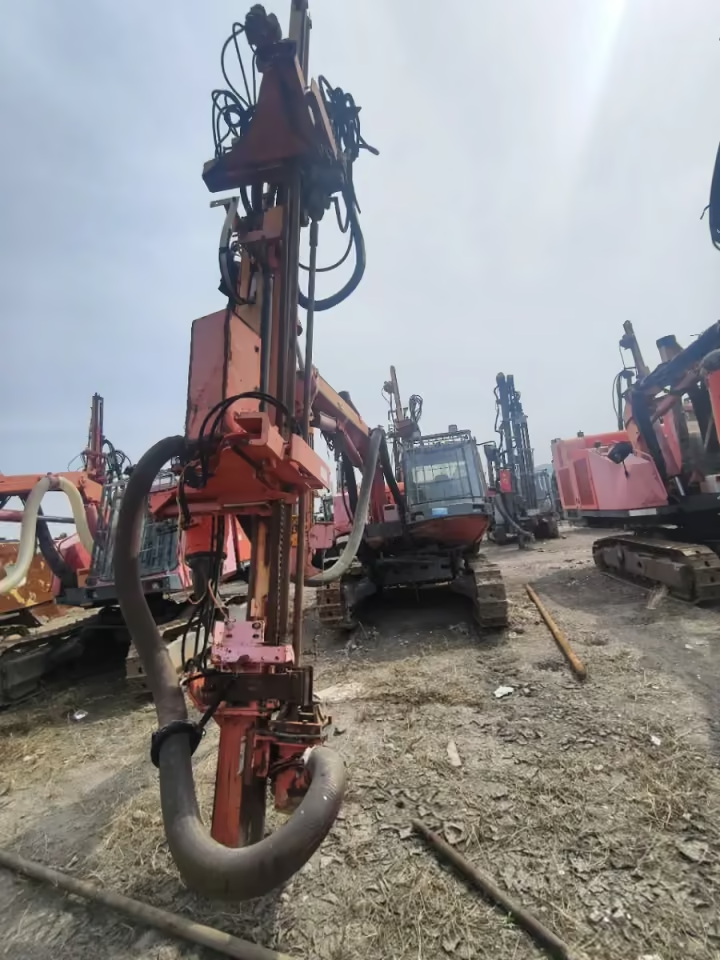
Ask for the current drill-head or rock-drill identification and the tool connections shown on the machine. A top-hammer rig is not converted into a DTH package simply by adding a compressor to a quotation. For a DTH application, document how rotation, feed and air reach the downhole tool. Use the correct manufacturer's information for each installed component. If the sale contains a drilling assembly rather than a complete rig, list the carrier and supporting systems still required.
- Begin with the fitted system and connection photographs, not the machine colour.
2. Work from borehole design to hammer and bit
Give the tool supplier the required hole diameter, drilling purpose, formation, depth and any casing arrangement. Request the hammer and bit combinations permitted by the applicable product documentation. A similar outside diameter does not prove that two bits have interchangeable shanks, splines or retention arrangements. Keep the exact part designation on the quotation and packing list. A cheaper consumable is not a saving if it cannot connect to the hammer supplied with the machine.
- Record the hammer model, bit part number and verified shank type.
3. Check the complete connection chain
Trace the drive connection through adapters and rods to the hammer and bit. Record thread designation, size, condition and any required crossover. Check rod dimensions against the rig's handling system and feed travel rather than ordering by the hammer size alone. Ask for clear close-up photographs and the relevant parts documents. Worn threads, damaged splines and unidentified adapters need assessment by a competent technician; a photo cannot establish remaining service life or an allowable operating load.
- Keep a connection schedule for the head, rods, adapters and hammer.
4. Match air demand without mixing operating points
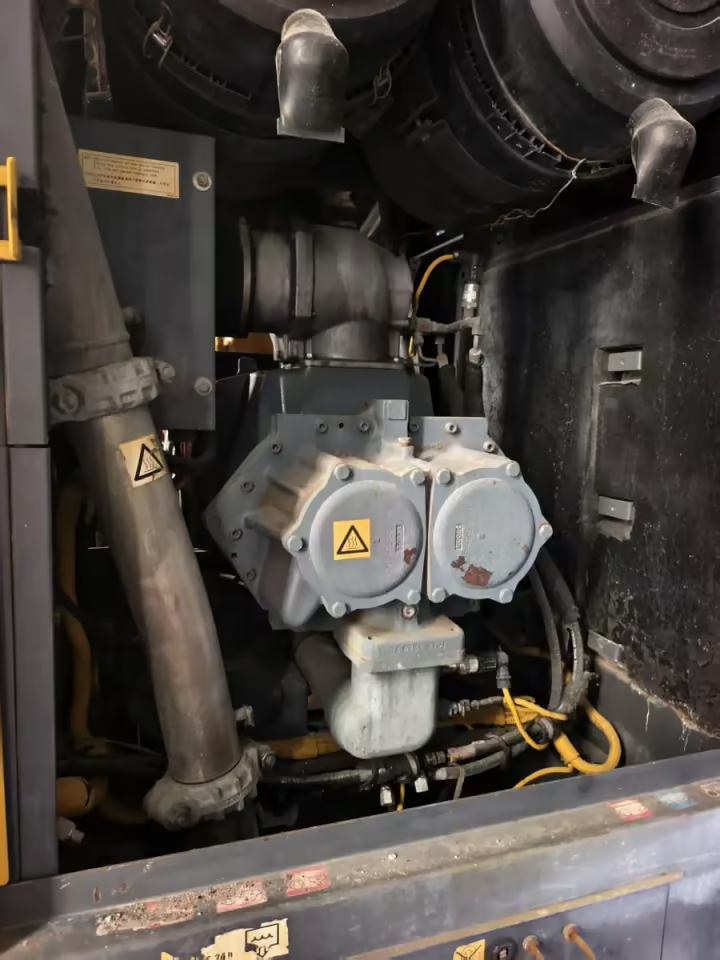
Use the tool maker's consumption information at the intended pressure and consider the project conditions and air path. On the compressor side, compare flow and pressure that belong to the same documented condition. CR-057 has a published nameplate pair of 18.6 m³/min at 20 bar. It is useful as an example of paired information, but it does not prove current measured output or compatibility with a selected hammer. Obtain the corresponding unit-specific evidence before buying the package.
- Request paired compressor data and the matching hammer consumption reference.
5. Choose the bit for the ground and maintenance plan
Bit face and carbide choices should follow the tool manufacturer's application advice for the formation. Mincon's guidance links bit wear to operating practice and the condition of the hammer and drive components. Use that principle to ask better procurement questions, not to prescribe one universal speed, feed setting or sharpening interval. Agree which wear photographs, measurements and replacement limits will be checked when used tools are included. New consumables and worn included tools should be separate quotation items.
- Compare tool suitability and documented condition as well as purchase price.
6. Separate the rig listing from the tool package
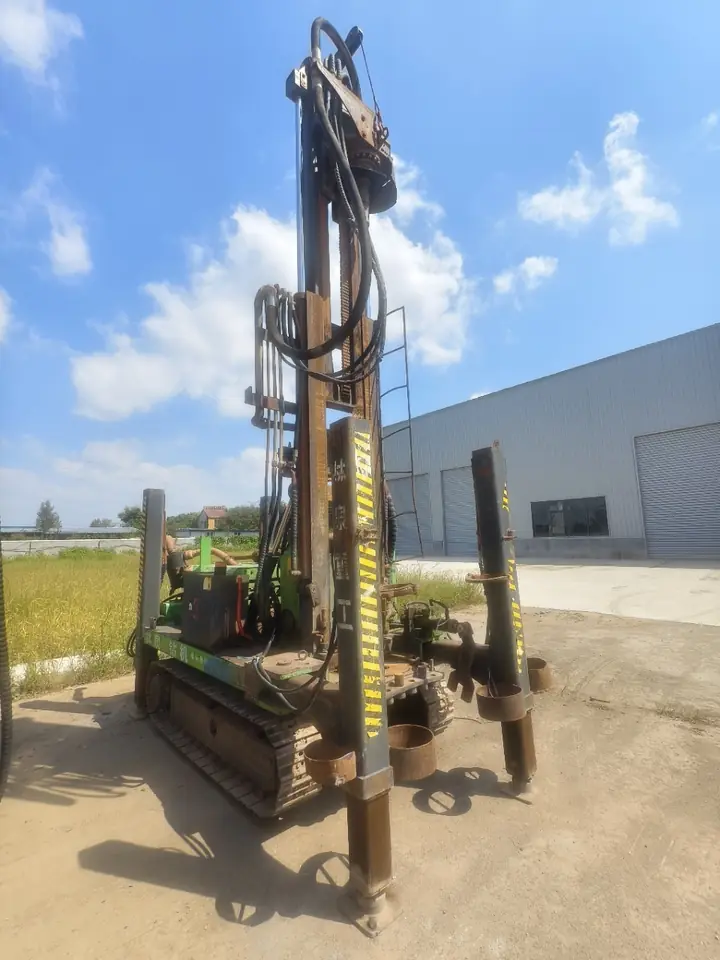
Plinton's water well records CR-062 and CR-069 can anchor a discussion about the required drilling setup. They do not establish which hammer, bit or rods are included with a sale. Link your inquiry to the relevant stock ID and attach your current tool designations if you already own equipment. Ask for an itemised compatibility response. Where a component plate or connection cannot be identified, retain the item for technical review rather than assuming it matches the model's usual configuration.
- Ask Leo to identify supplied, optional and buyer-owned tooling separately.
7. Put compatibility and handover into the order
The order should identify the rig, compressor if supplied, hammer, bit, rods and adapters with their agreed quantities. Record manuals, lubrication requirements, inspection scope and any demonstration conditions. Use qualified personnel and the applicable manuals for handling pressurised equipment and tool work. This purchasing checklist is not an operating procedure or a condition report. Retain photographs and the itemised handover record so that the package arriving at the destination can be checked against the agreed equipment.
- Resolve compatibility before shipment and keep the same identifiers at handover.
Topic decision table: DTH Hammer and Bit Selection for a Used Drilling Rig
| Topic checkpoint | Buyer action | Evidence-based explanation |
|---|---|---|
| 1. Identify the actual drilling system | Begin with the fitted system and connection photographs, not the machine colour. | Ask for the current drill-head or rock-drill identification and the tool connections shown on the machine. |
| 2. Work from borehole design to hammer and bit | Record the hammer model, bit part number and verified shank type. | Give the tool supplier the required hole diameter, drilling purpose, formation, depth and any casing arrangement. |
| 3. Check the complete connection chain | Keep a connection schedule for the head, rods, adapters and hammer. | Trace the drive connection through adapters and rods to the hammer and bit. |
| 4. Match air demand without mixing operating points | Request paired compressor data and the matching hammer consumption reference. | Use the tool maker's consumption information at the intended pressure and consider the project conditions and air path. |
Apply this guide to current inventory
- Water Well Drilling Rigs →
- Drilling Rigs →
- Air Compressors →
- Inspection →
- Export planning for Indonesia, the Middle East and Africa →
- Linquan LQ-260 · CR-062 →
- Zhengyuan SL500S · CR-069 →
- Atlas Copco XRHS666 C · CR-057 →
- How to Size a Portable Air Compressor for DTH Drilling: Pressure, Flow and Site Conditions →
- Used Drill Rig Maintenance: Before the First Shift →
- Used Drill Rig Spare Parts: What to Check Before Purchase →
Editorial details and evidence notes
How should the evidence be interpreted?
| Evidence type | What it can support | What it cannot prove |
|---|---|---|
| Official or manufacturer source | The cited family, standard or regulatory statement | The configuration or condition of a listed used unit |
| Published inventory record | Stock ID, supplied fields and linked listing photos | Current availability, hidden condition or included scope |
| Unit inspection evidence | Serial-specific observations within the agreed test scope | Performance outside the tested conditions |
Questions about using this guide
Does this guide prove that a listed machine has the feature or compliance discussed?
No. The guide explains a verification method. Confirm the exact stock ID, serial identity, installed configuration and destination rules before relying on it.
What should a buyer do before requesting a final quote?
Send the stock ID, project requirement, destination and requested inspection scope, then ask for current machine-specific evidence.