1. Build a handover file for the exact machine
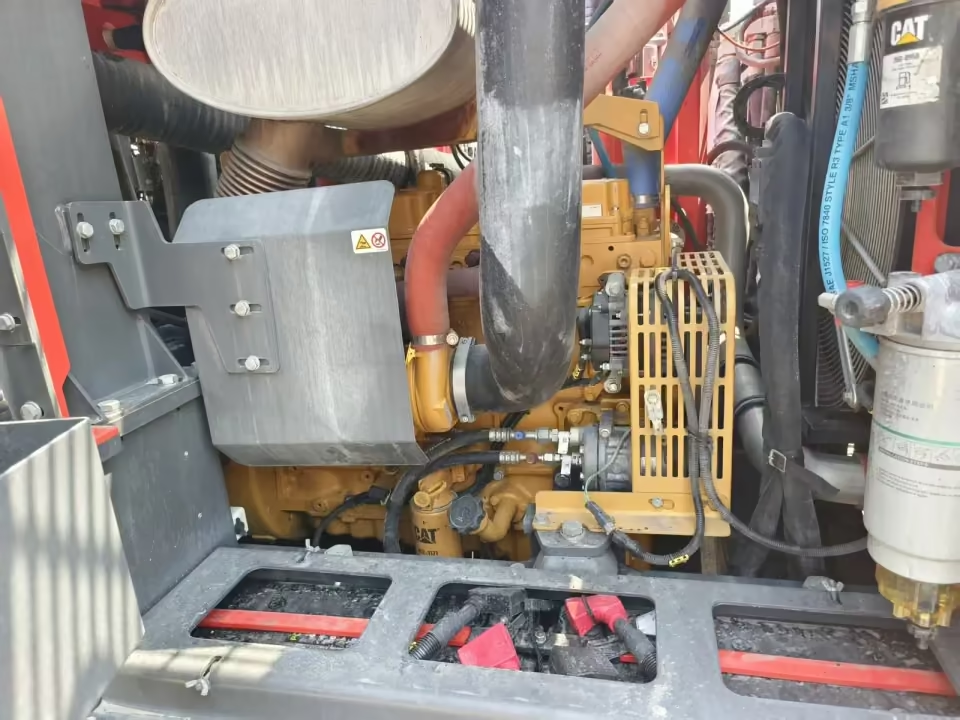
Collect the stock ID, serial plates, current configuration, manuals, included accessories and the agreed inspection record. Check the delivered items against the quotation and photograph their condition before commissioning. Manufacturer service documents must match the installed engine, hydraulic system and drilling equipment, especially when components have been replaced. A model brochure is useful background but does not prove the present configuration. Assign responsibility for resolving discrepancies before the rig begins productive work.
- Keep identity, configuration and delivery condition in one handover record.
2. Read service history alongside the counters
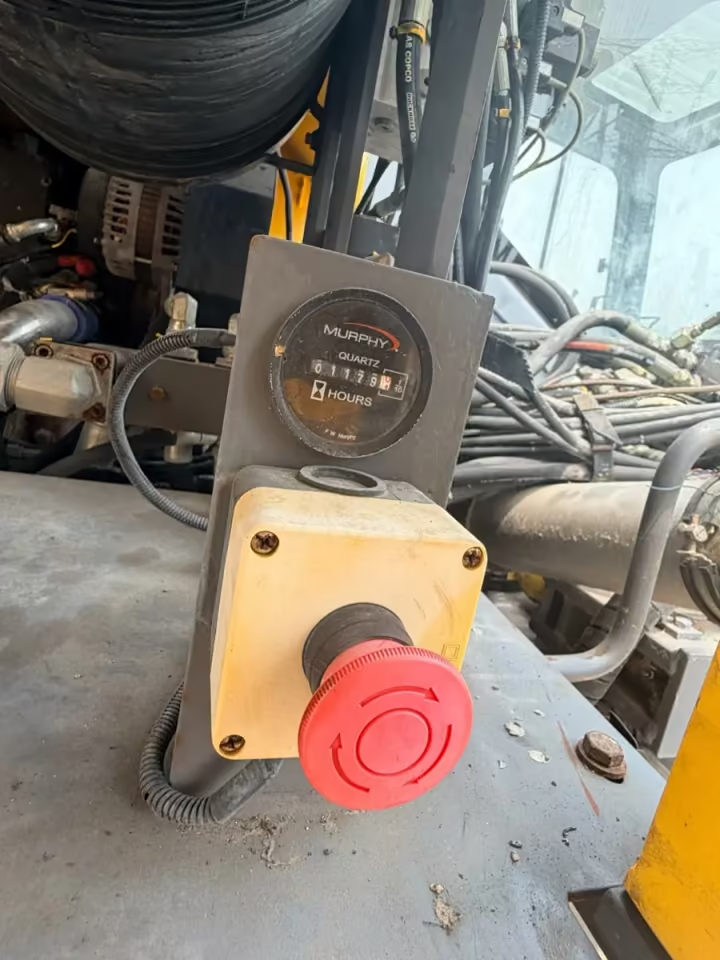
Photograph each available engine, drilling or percussion counter and record when the reading was taken. Compare the readings with invoices, controller replacements and component service records where available. CR-006 has an existing instrument-photo reading of 3,419 hours; CR-007 has a recorded instrument reading of 1,667.4 hours. These supplied records do not establish verified lifetime hours or the next service due. Confirm the current readings and maintenance history before scheduling work on either machine.
- Use the counter source and date rather than treating a number as complete history.
3. Resolve fluids, filters and storage history
Ask which fluids and filters were last changed, with dates, counter readings and product specifications. If the history cannot be reconciled, have the responsible technician define the initial service scope using the applicable manuals and inspection findings. Do not mix lubricants or choose service intervals from a similar-looking machine. Storage duration, contamination, temperature and working environment may affect the assessment. Sampling, draining and fluid handling should follow the service procedure and the site's environmental requirements.
- Document the specified fluid, filter and service basis for each system.
4. Inspect the fitted systems before energising them
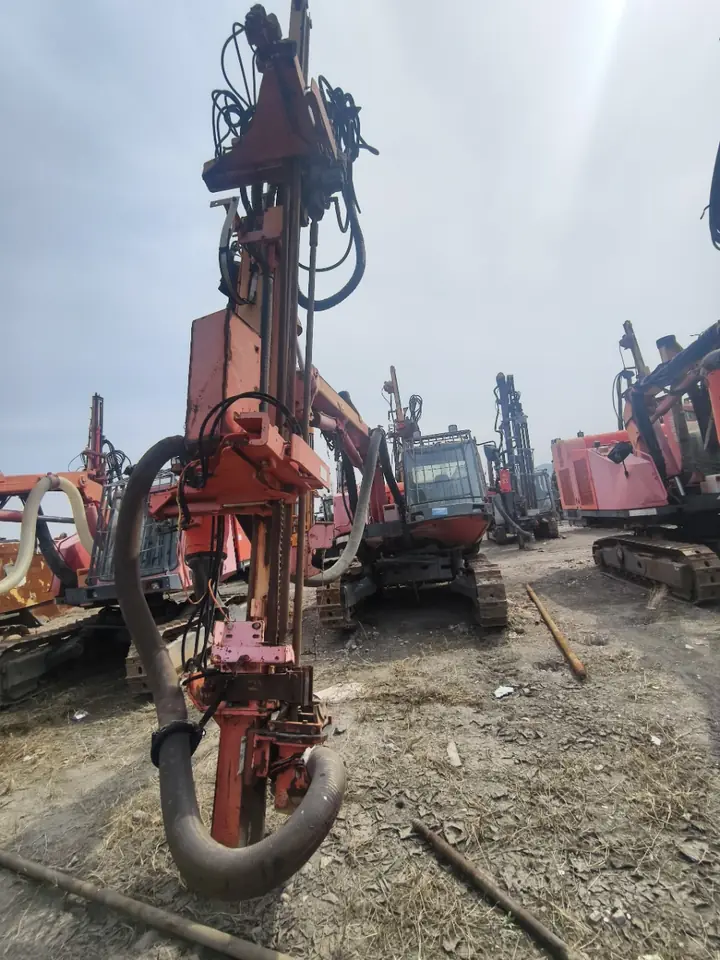
A competent technician should review the access equipment, guards, emergency stops, hose routing, visible leaks and other fitted safety systems under the machine's procedure. Check the mast, feed, rod handling and undercarriage or carrier as applicable. Geoprobe's pre-start material and Lone Star's maintenance guidance illustrate systematic checks for their equipment, not a universal procedure for all brands. Defects that affect safe operation require appropriate correction; a clean exterior is not an acceptance test.
- Use model-specific checks and record defects and corrective work separately.
5. Establish a controlled functional baseline
Agree the operator, safe test area, fitted tools, warm-up requirements and permitted test scope before running functions. Record observations, warnings and the conditions under which a function was checked. An unloaded demonstration cannot establish drilling output under a different ground condition, and a brief start-up cannot establish thermal performance through a working shift. Any instrumented diagnosis or load test must follow the appropriate technical procedure. Keep untested functions distinct from those observed without an apparent issue.
- Record the method and limits of each test rather than a blanket passed label.
6. Prepare for the first working shift
Once the responsible personnel have accepted the rig for use, organise the correct consumables, tools, manuals and contact route for service support. Record the initial counters and operating observations so later changes have a comparison point. Identify who performs daily checks, who records defects and who decides whether work must stop. The relevant manual and site rules determine the actual schedule. This guide does not set universal daily, weekly or hourly maintenance intervals for our inventory.
- Give each check an owner and a documented escalation route.
7. Request a defined handover scope with your quote
If considering CR-006 or CR-007, ask Leo for the current evidence and proposed handover scope for that stock ID. Specify the manuals, current instrument photographs, service documents and functional checks you want to review. Ask whether any requested work is included or separately quoted; do not assume a general dealer description includes a rebuild or warranty. Keep the purchase decision, agreed repairs and destination commissioning responsibilities explicit so that all parties assess the same deliverable.
- Use the unit-specific inquiry and keep the requirements editable.
Topic decision table: Used Drill Rig Maintenance: Before the First Shift
| Topic checkpoint | Buyer action | Evidence-based explanation |
|---|---|---|
| 1. Build a handover file for the exact machine | Keep identity, configuration and delivery condition in one handover record. | Collect the stock ID, serial plates, current configuration, manuals, included accessories and the agreed inspection record. |
| 2. Read service history alongside the counters | Use the counter source and date rather than treating a number as complete history. | Photograph each available engine, drilling or percussion counter and record when the reading was taken. |
| 3. Resolve fluids, filters and storage history | Document the specified fluid, filter and service basis for each system. | Ask which fluids and filters were last changed, with dates, counter readings and product specifications. |
| 4. Inspect the fitted systems before energising them | Use model-specific checks and record defects and corrective work separately. | A competent technician should review the access equipment, guards, emergency stops, hose routing, visible leaks and other fitted safety systems under the machine's procedure. |
Apply this guide to current inventory
- Drilling Rigs →
- Air Compressors →
- Inspection →
- Export planning for Indonesia, the Middle East and Africa →
- Sandvik DX700 · CR-006 →
- Atlas Copco D45 · CR-007 →
- Used Drilling Rig Inspection Checklist: 12 Evidence-Based Checks Before You Buy →
- Engine Hours vs Drilling Hours on a Used Drill Rig →
- Used Drill Rig Spare Parts: What to Check Before Purchase →
Editorial details and evidence notes
How should the evidence be interpreted?
| Evidence type | What it can support | What it cannot prove |
|---|---|---|
| Official or manufacturer source | The cited family, standard or regulatory statement | The configuration or condition of a listed used unit |
| Published inventory record | Stock ID, supplied fields and linked listing photos | Current availability, hidden condition or included scope |
| Unit inspection evidence | Serial-specific observations within the agreed test scope | Performance outside the tested conditions |
Questions about using this guide
Does this guide prove that a listed machine has the feature or compliance discussed?
No. The guide explains a verification method. Confirm the exact stock ID, serial identity, installed configuration and destination rules before relying on it.
What should a buyer do before requesting a final quote?
Send the stock ID, project requirement, destination and requested inspection scope, then ask for current machine-specific evidence.