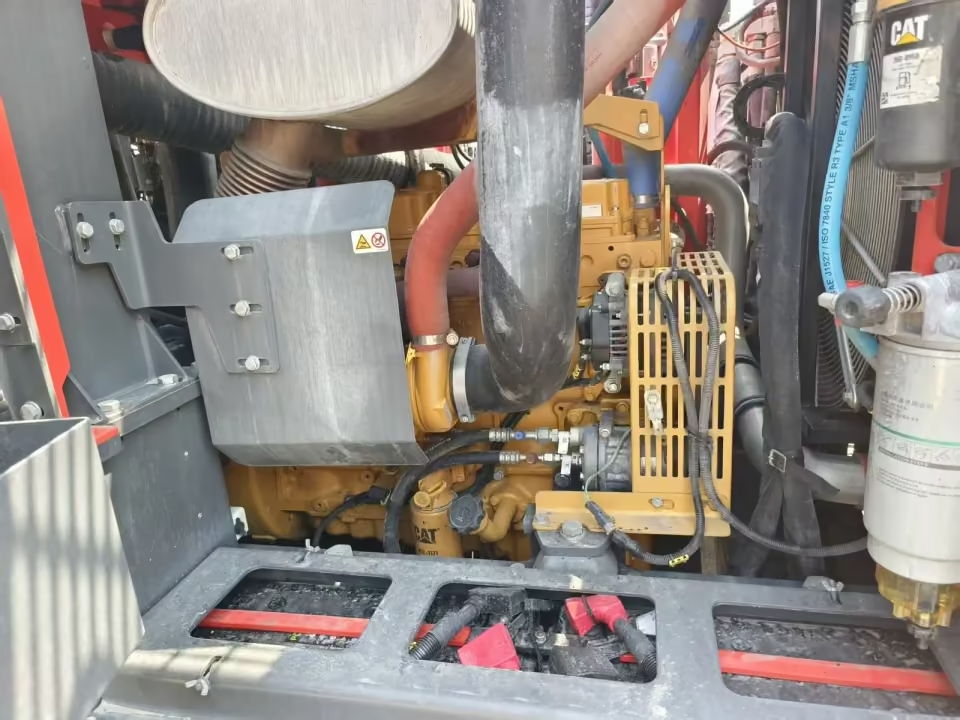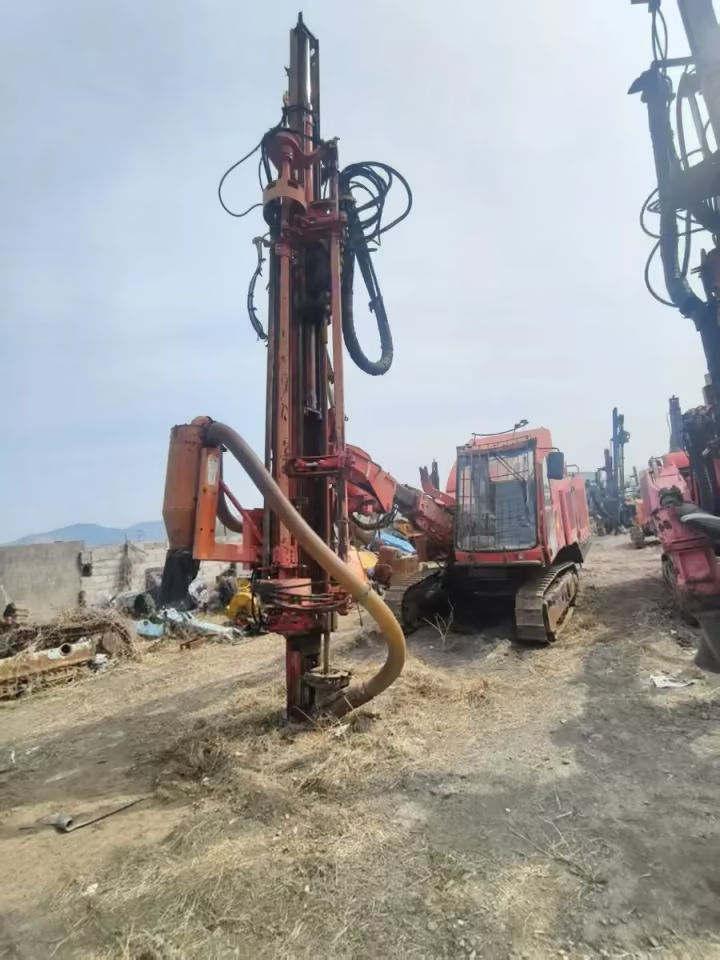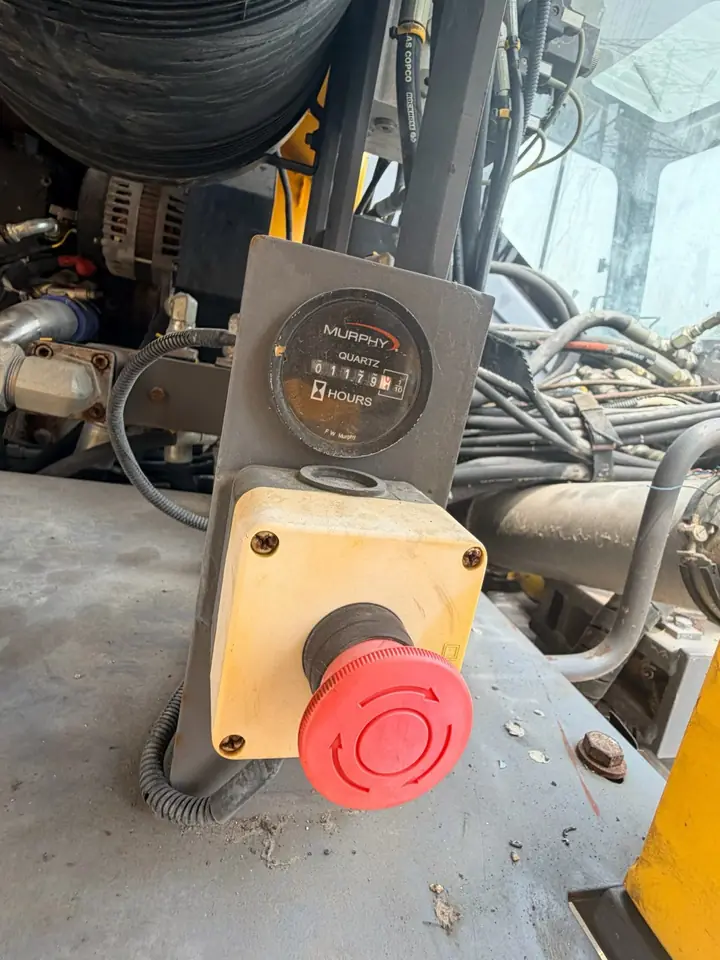
What does each counter measure?
Engine hours record engine operation according to the machine's monitoring system. Drilling hours describe a different activity, whose definition depends on the control system. Some equipment also records percussion or transmission hours. Epiroc's Certiq sheet for selected SmartROC models lists engine hours and drill hours separately. It illustrates the distinction; it does not prove that an older rig has Certiq or the same counters. Ask for the operator manual applicable to the installed control system and use its definitions when reading the display.
- Write down the exact counter label, unit, reading and recording date.
Why can engine hours exceed drilling hours?
An engine can run while the rig is positioning, waiting or carrying out other supported functions. The balance between those activities varies with the job and operating routine. Do not convert engine hours into drilling hours using a fixed percentage. Do not treat the difference alone as evidence of misuse either. If a working-time report is available for the actual unit, review the period it covers and the activity definitions before drawing a conclusion. A lifetime total and a recent shift report answer different questions.
- Compare like-for-like lifetime counters, and keep shift or trip totals in separate columns.
What happens when a component or display is replaced?
The chassis, engine, rock drill and control display may have different service histories. A replacement component does not reset the history of the entire rig. Ask which counter relates to the original machine and which relates to a replaced assembly. Request the replacement date, component identification and associated workshop record when available. A screen photograph without those connections cannot establish continuity. Record the explanation in the purchase file so the receiving workshop can maintain the same history after delivery.
- Link any replacement record to both the machine serial number and the fitted component.
Which evidence should a buyer request?
Request a dated photograph or continuous video that shows the machine identity and the relevant display pages. Read the counter names rather than relying on a cropped number sent without context. Compare the readings with maintenance invoices, previous inspection records and any authorised data export that the seller can provide. These records may cover different dates, so arrange them chronologically. Conflicting readings need a documented explanation before being used in a valuation or service plan; choosing the smallest number conceals the question instead of resolving it.
- Build a dated counter history and ask about any discontinuity before agreeing the purchase scope.
Can hours determine component condition?
Hours help organise the evidence, but they do not replace an inspection. Ground conditions, tooling, operating practice and maintenance affect the work a machine has experienced. Sandvik's RD314 product information uses percussion hours in its service guidance, illustrating why a component-specific measure matters. That guidance is for the named rock drill, not a universal interval for every Sandvik or Atlas Copco rig. The receiving workshop should use the manual and history for the components actually installed on the selected machine.
- Use the applicable service instructions and inspection findings when planning maintenance.
How should hours be used on a Plinton shortlist?
Start with the exact stock record, such as Atlas Copco D45 CR-017 or Sandvik DX700 CR-006, then request the relevant counter evidence for that unit. These examples identify separate listings; this guide assigns no additional hours to either machine. Use the existing inspection checklist to connect the readings with hydraulic, feed, undercarriage and operating observations. A model name or year does not supply a missing reading. The final quotation and handover file should refer to the same unit-specific evidence that the buyer reviewed.
- Send the stock ID and ask for clearly labelled counter photographs before comparing working hours.
Topic decision table: Engine Hours vs Drilling Hours on a Used Drill Rig
| Topic checkpoint | Buyer action | Evidence-based explanation |
|---|---|---|
| What does each counter measure? | Write down the exact counter label, unit, reading and recording date. | Engine hours record engine operation according to the machine's monitoring system. |
| Why can engine hours exceed drilling hours? | Compare like-for-like lifetime counters, and keep shift or trip totals in separate columns. | An engine can run while the rig is positioning, waiting or carrying out other supported functions. |
| What happens when a component or display is replaced? | Link any replacement record to both the machine serial number and the fitted component. | The chassis, engine, rock drill and control display may have different service histories. |
| Which evidence should a buyer request? | Build a dated counter history and ask about any discontinuity before agreeing the purchase scope. | Request a dated photograph or continuous video that shows the machine identity and the relevant display pages. |
Apply this guide to current inventory
- Drilling Rigs →
- Air Compressors →
- Inspection →
- Export planning for Indonesia, the Middle East and Africa →
- Atlas Copco D45 · CR-017 →
- Sandvik DX700 · CR-006 →
- Used Drilling Rig Inspection Checklist: 12 Evidence-Based Checks Before You Buy →
- Used Drill Rig Spare Parts: What to Check Before Purchase →
- Used Drilling Rig Prices: How to Compare Equipment Quotes →
Editorial details and evidence notes
How should the evidence be interpreted?
| Evidence type | What it can support | What it cannot prove |
|---|---|---|
| Official or manufacturer source | The cited family, standard or regulatory statement | The configuration or condition of a listed used unit |
| Published inventory record | Stock ID, supplied fields and linked listing photos | Current availability, hidden condition or included scope |
| Unit inspection evidence | Serial-specific observations within the agreed test scope | Performance outside the tested conditions |
Questions about using this guide
Does this guide prove that a listed machine has the feature or compliance discussed?
No. The guide explains a verification method. Confirm the exact stock ID, serial identity, installed configuration and destination rules before relying on it.
What should a buyer do before requesting a final quote?
Send the stock ID, project requirement, destination and requested inspection scope, then ask for current machine-specific evidence.