1. Decide what the project actually needs
Set the drilling method, hole range, ground conditions, working period and planned utilisation before comparing ownership routes. Include the air or fluid package, rods and tools. A low-cost rig that needs additional equipment should not be compared with a ready-configured package without those costs. Identify which requirements are mandatory and which are optional. For uncertain future work, assess more than one utilisation scenario instead of assuming that the machine will earn revenue every available day.
- Use one project brief for the used, new and rental proposals.
2. Evaluate a used purchase by its individual evidence
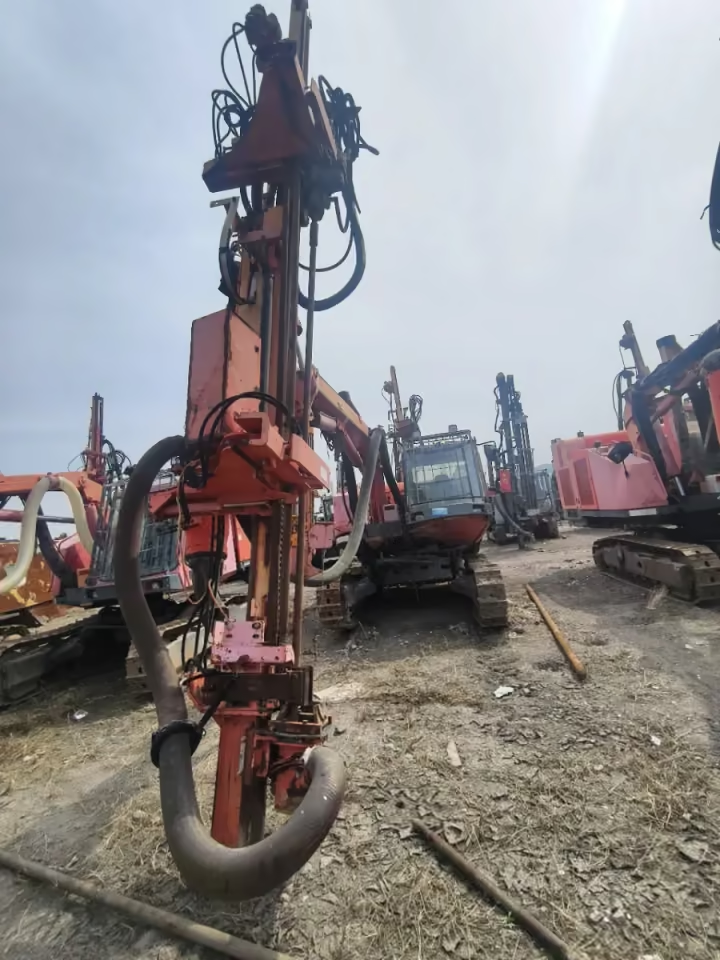
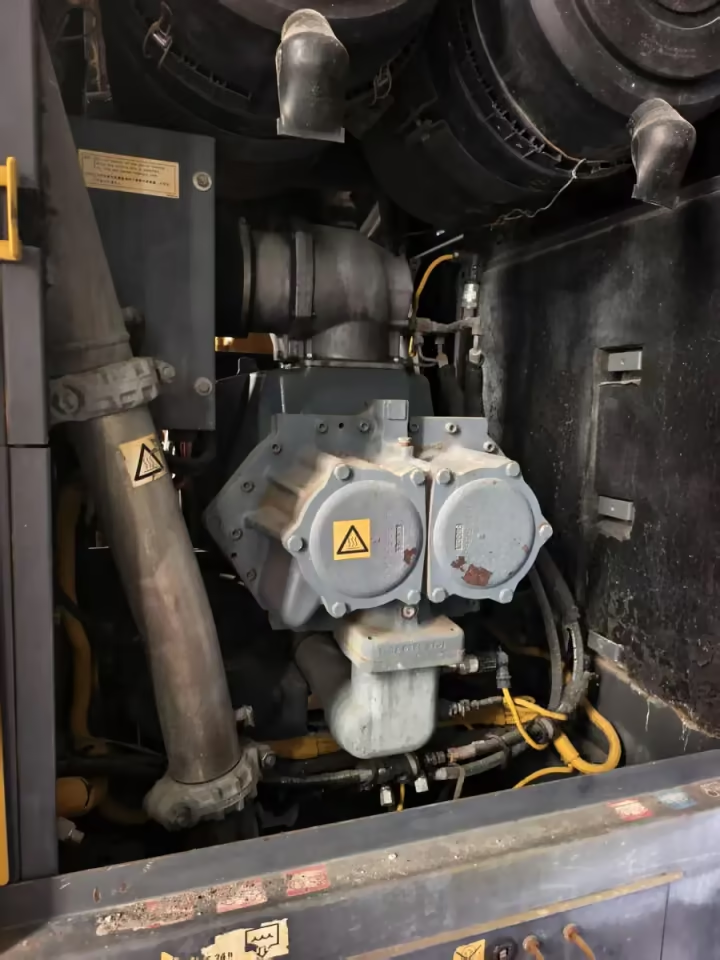
A used purchase gives you a specific machine to inspect and a specific configuration to price. Compare its identity, records, current condition and agreed repair scope; age alone does not establish remaining life. Plinton records CR-006 and CR-007 provide separate starting points for quotations, not interchangeable equipment packages or a promise of immediate availability. Include inspection, initial service, tools and delivery in your comparison. Current condition and suitability must be verified for the exact unit before relying on them.
- Price the actual machine and the work needed to prepare it for your project.
3. Read a new-machine proposal beyond the brochure
Check the quoted configuration, options, expected delivery commitment, commissioning, operator training and written warranty terms with the supplier. Confirm which items are included and which depend on location or a separate service contract. Do not assume every model in a manufacturer's range offers the same support or that a new machine eliminates all downtime. Include destination requirements and the availability of consumables and technical assistance. Compare the delivered scope with the used-machine proposal rather than just comparing base prices.
- Use the supplier's written configuration and support terms.
4. Read the rental conditions before comparing rates
A rental may suit a defined working period or an uncertain workload, but check minimum term, included hours, excess usage, transport, servicing responsibility and return conditions. Rig Source's public rental guidance explains why hire can be considered for different project durations. Its service terms are not our terms and must be obtained directly from the chosen provider. Include attachment and support-equipment charges and clarify what happens during a breakdown. A daily rate alone does not describe the delivered cost.
- Obtain the rental provider's full quote and responsibility schedule.
5. Build the comparison with transparent assumptions
For ownership, list acquisition, mobilisation, initial work, operating and support costs over the chosen period, then show any assumed resale value separately. For rental, list hire charges, mobilisation, usage charges and the operating costs that remain with the renter. Do not count the same cost twice. Keep currency, tax treatment and comparison period consistent, and have financial or tax assumptions checked by the appropriate adviser. Use actual quotations; this guide provides no market-price estimate or guaranteed saving.
- Keep each cost, source, period and assumption in a separate comparison row.
6. Test the decision against downtime and changing workload
Recalculate the comparison for lower utilisation, a delayed start, additional transport and a repair scenario supported by an actual quotation. Keep the assumptions visible instead of presenting one precise total as certain. Ask how each supplier handles parts availability and technical support at the destination. A machine's higher capacity has little economic value if the project cannot use it or the crew cannot support it. Compare the expected work delivered under each scenario, not simply the months the equipment is owned.
- Use alternative workload and support scenarios before committing funds.
7. Request comparable proposals and choose the scope
Send the same requirements to each provider and request itemised inclusions, exclusions, timing and acceptance conditions. For our used-equipment quote, include the stock ID, destination, required drilling task and any buyer-owned supporting equipment. Keep CR-006 and CR-007 in separate requests if you are comparing them. Review their current records and inspection scope before deciding. There is no universal winner among used, new and rental: the useful result is a documented choice for your project and its constraints.
- Compare like-for-like proposals and retain the supporting evidence.
Topic decision table: Used vs New vs Rental Drill Rigs: Compare the Full Package
| Topic checkpoint | Buyer action | Evidence-based explanation |
|---|---|---|
| 1. Decide what the project actually needs | Use one project brief for the used, new and rental proposals. | Set the drilling method, hole range, ground conditions, working period and planned utilisation before comparing ownership routes. |
| 2. Evaluate a used purchase by its individual evidence | Price the actual machine and the work needed to prepare it for your project. | A used purchase gives you a specific machine to inspect and a specific configuration to price. |
| 3. Read a new-machine proposal beyond the brochure | Use the supplier's written configuration and support terms. | Check the quoted configuration, options, expected delivery commitment, commissioning, operator training and written warranty terms with the supplier. |
| 4. Read the rental conditions before comparing rates | Obtain the rental provider's full quote and responsibility schedule. | A rental may suit a defined working period or an uncertain workload, but check minimum term, included hours, excess usage, transport, servicing responsibility and return conditions. |
Apply this guide to current inventory
- Drilling Rigs →
- Air Compressors →
- Inspection →
- Export planning for Indonesia, the Middle East and Africa →
- Sandvik DX700 · CR-006 →
- Atlas Copco D45 · CR-007 →
- Used Drilling Rig Prices: How to Compare Equipment Quotes →
- How to Calculate the Real Cost per Drilled Metre →
- Used Drill Rig Maintenance: Before the First Shift →
Editorial details and evidence notes
How should the evidence be interpreted?
| Evidence type | What it can support | What it cannot prove |
|---|---|---|
| Official or manufacturer source | The cited family, standard or regulatory statement | The configuration or condition of a listed used unit |
| Published inventory record | Stock ID, supplied fields and linked listing photos | Current availability, hidden condition or included scope |
| Unit inspection evidence | Serial-specific observations within the agreed test scope | Performance outside the tested conditions |
Questions about using this guide
Does this guide prove that a listed machine has the feature or compliance discussed?
No. The guide explains a verification method. Confirm the exact stock ID, serial identity, installed configuration and destination rules before relying on it.
What should a buyer do before requesting a final quote?
Send the stock ID, project requirement, destination and requested inspection scope, then ask for current machine-specific evidence.