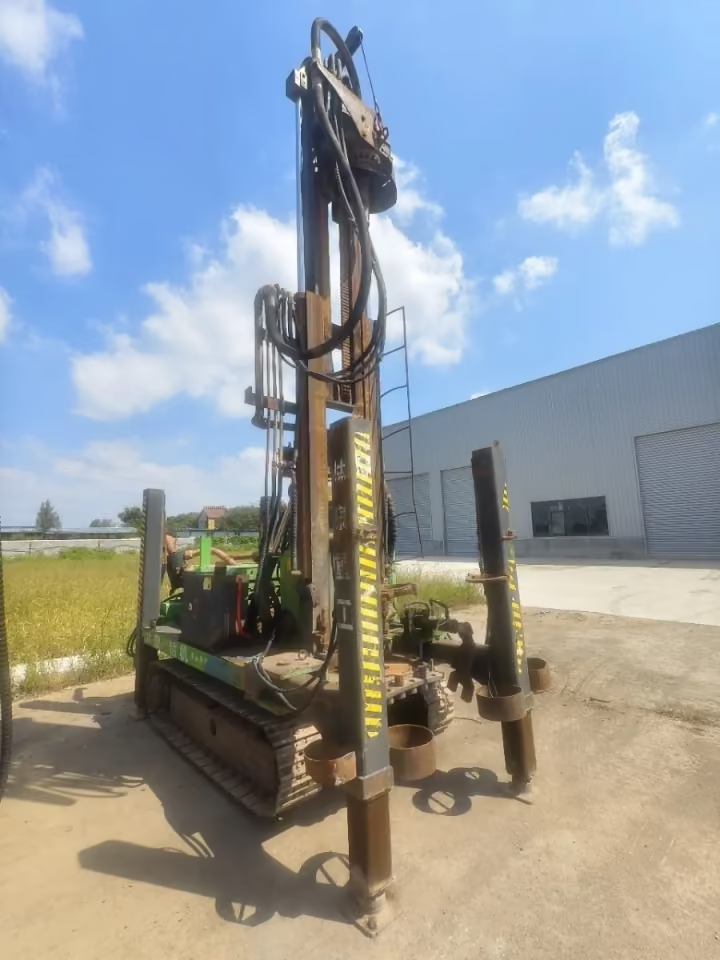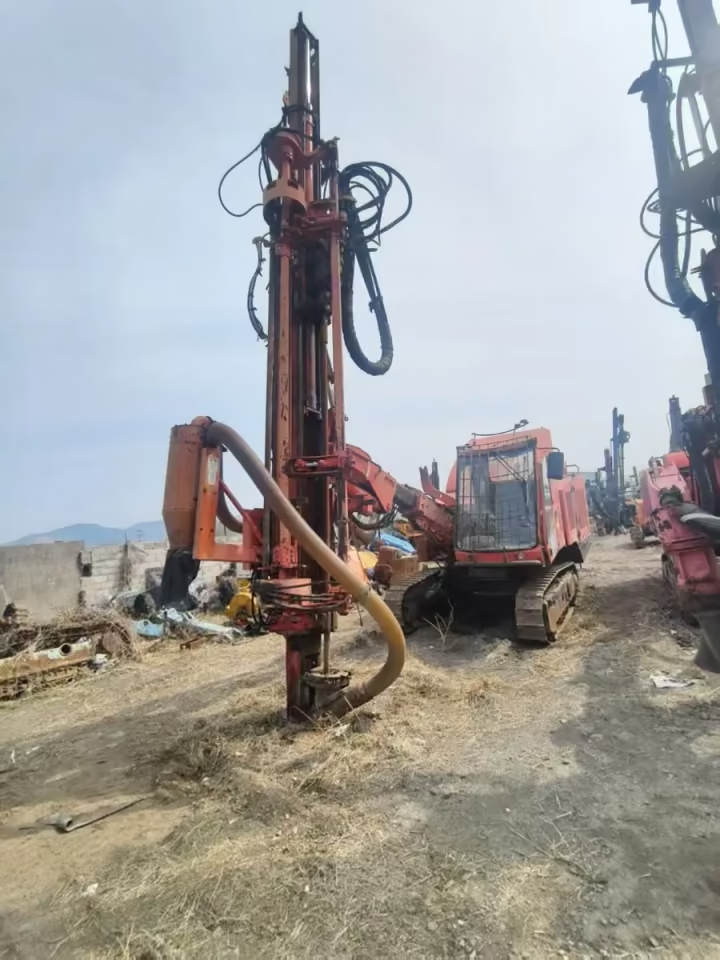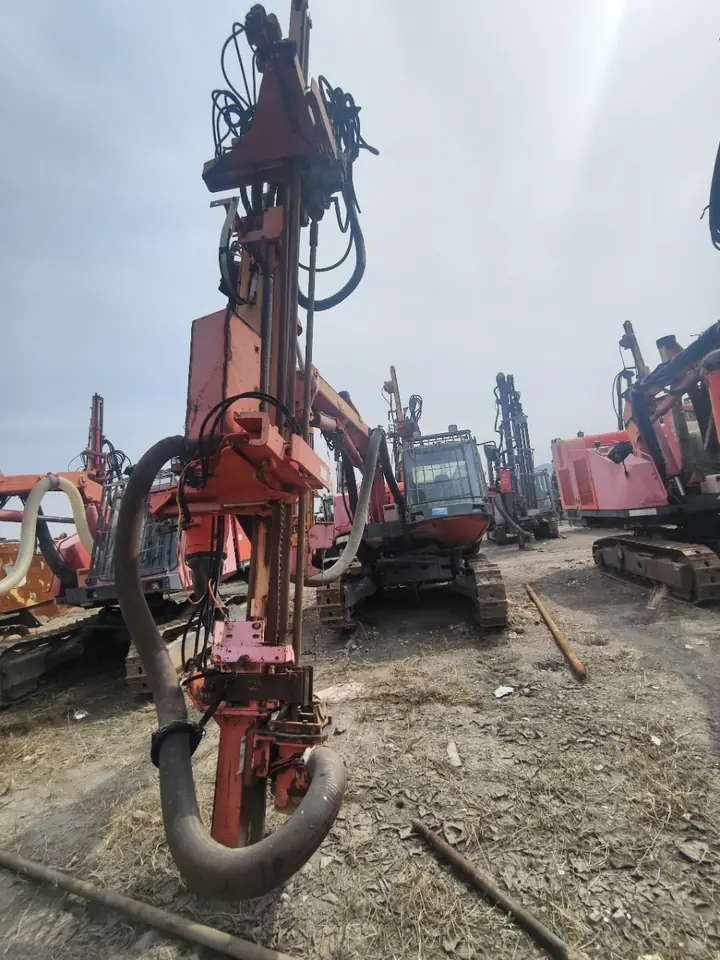
1. Start from the installed drilling system
Identify whether the job uses a top-hammer, DTH or rotary drilling system and record the installed interfaces. Top-hammer tooling connects the rock drill to the string through the applicable shank adapter and associated parts. A DTH package has its own rotary-head, pipe and hammer connections. We ask for identification photographs and manufacturer references because visually similar components can belong to different systems. Build the list around the intended drilling method and fitted equipment rather than assuming all rods offered with a used rig can be mixed.
- Map each interface in sequence from the rig to the tool.
2. Record the full thread designation
Write down thread standard, size, connection direction where relevant, and the manufacturer part reference. Measure and identify components using the applicable documentation; outside diameter alone does not describe thread geometry. List crossovers and adapters explicitly, including which end connects to which component. An adapter can solve a connection problem only when the complete assembly is suitable for the duty and manufacturer's limits. Ask your tooling supplier to review the proposed string before ordering quantities. Keeping this record also makes future replenishment much easier.
- Use part references and complete connection descriptions.
3. Match rod length to the machine's handling system
Check the actual feed travel, rod length, carousel or rack arrangement, clamps and breakout equipment. A nominally compatible connection does not establish that a rod can be loaded, held and handled by the fitted system. Include rod outside diameter, length and mass in the review where the machine documentation calls for them. Ask which tools and adapters are included with the unit and which are separate. We make these distinctions in the package discussion so a low machine price does not conceal a missing rod-handling requirement.
- Confirm feed, clamp and handling compatibility for the proposed rods.
4. Assess used tooling as a separate purchase item
Ask for current photographs of threads, shoulders, straightness and visible wear, then agree an inspection method with a competent tooling specialist. A serviceable machine does not establish the condition of every rod beside it. Keep the proposed reusable quantity separate from new replacement rods and consumables. Manufacturer inspection and discard criteria should guide the assessment rather than an arbitrary percentage of remaining life. If used tools are included, put their identification and agreed quantities on the sale list instead of relying on a group photograph.
- Create an itemised tooling list with the agreed assessment scope.
5. Plan replenishment around the project
Calculate the operating string and spares from your hole plan, rod length, handling arrangement and local supply options. Avoid converting a target depth straight into a purchase quantity without allowing for the actual string configuration and work sequence. Ask about availability of matching couplings, shank adapters, bits and service tools, not just rods. A compatible replacement route is valuable when a project operates far from the supplier. We keep tooling costs and machine costs separate so you can compare a complete operating package with other offers.
- List operating quantities and spare quantities independently.
6. Send the rig and tooling requirements together
Send us the stock ID, drilling method, hole diameter and depth, existing tool references and any equipment you want to reuse. Include photographs of the connections and the proposed rod-handling arrangement. We can use that information for a unit-specific quotation and refer technical compatibility questions to the appropriate documentation or specialist. Our hammer-selection article covers the lower end of a DTH string, while the spare-parts guide covers ongoing support. Together they help you order an identifiable package instead of an assortment of parts with similar names.
- Attach the connection map and quantities to your rig inquiry.
Topic decision table: Drill Rods and Thread Compatibility: Building a Used Rig Tooling List
| Topic checkpoint | Buyer action | Evidence-based explanation |
|---|---|---|
| 1. Start from the installed drilling system | Map each interface in sequence from the rig to the tool. | Identify whether the job uses a top-hammer, DTH or rotary drilling system and record the installed interfaces. |
| 2. Record the full thread designation | Use part references and complete connection descriptions. | Write down thread standard, size, connection direction where relevant, and the manufacturer part reference. |
| 3. Match rod length to the machine's handling system | Confirm feed, clamp and handling compatibility for the proposed rods. | Check the actual feed travel, rod length, carousel or rack arrangement, clamps and breakout equipment. |
| 4. Assess used tooling as a separate purchase item | Create an itemised tooling list with the agreed assessment scope. | Ask for current photographs of threads, shoulders, straightness and visible wear, then agree an inspection method with a competent tooling specialist. |
Apply this guide to current inventory
Editorial details and evidence notes
How should the evidence be interpreted?
| Evidence type | What it can support | What it cannot prove |
|---|---|---|
| Official or manufacturer source | The cited family, standard or regulatory statement | The configuration or condition of a listed used unit |
| Published inventory record | Stock ID, supplied fields and linked listing photos | Current availability, hidden condition or included scope |
| Unit inspection evidence | Serial-specific observations within the agreed test scope | Performance outside the tested conditions |
Questions about using this guide
Does this guide prove that a listed machine has the feature or compliance discussed?
No. The guide explains a verification method. Confirm the exact stock ID, serial identity, installed configuration and destination rules before relying on it.
What should a buyer do before requesting a final quote?
Send the stock ID, project requirement, destination and requested inspection scope, then ask for current machine-specific evidence.