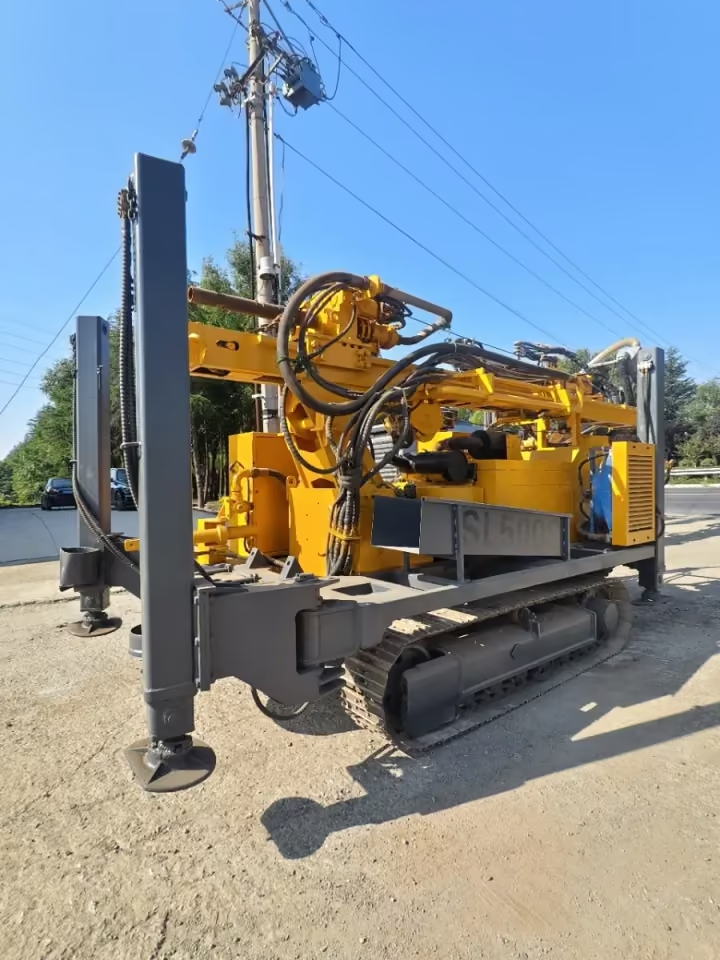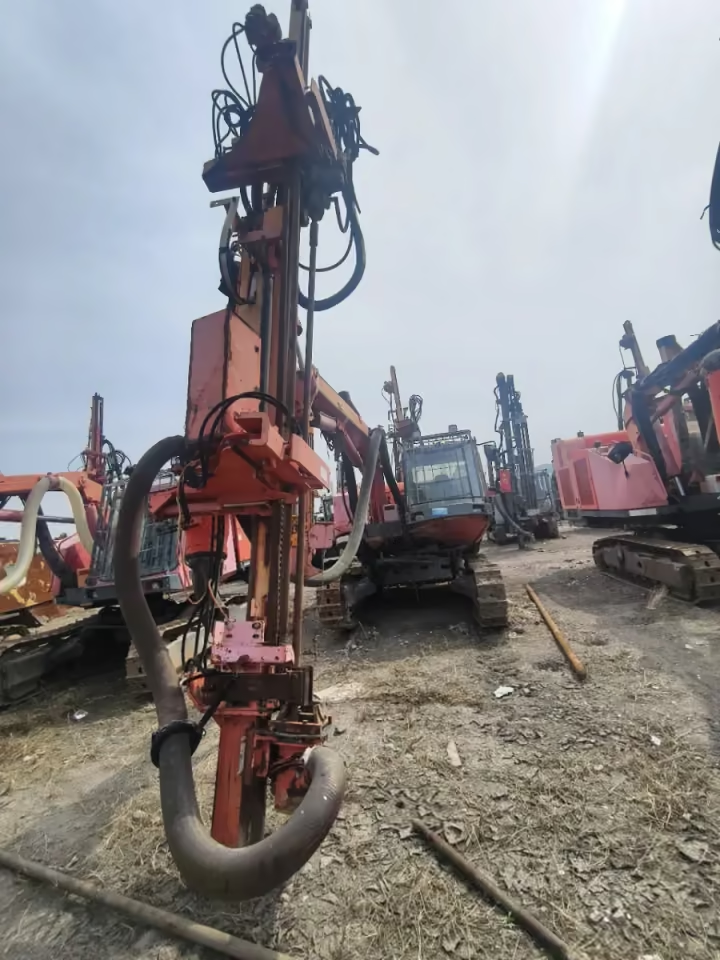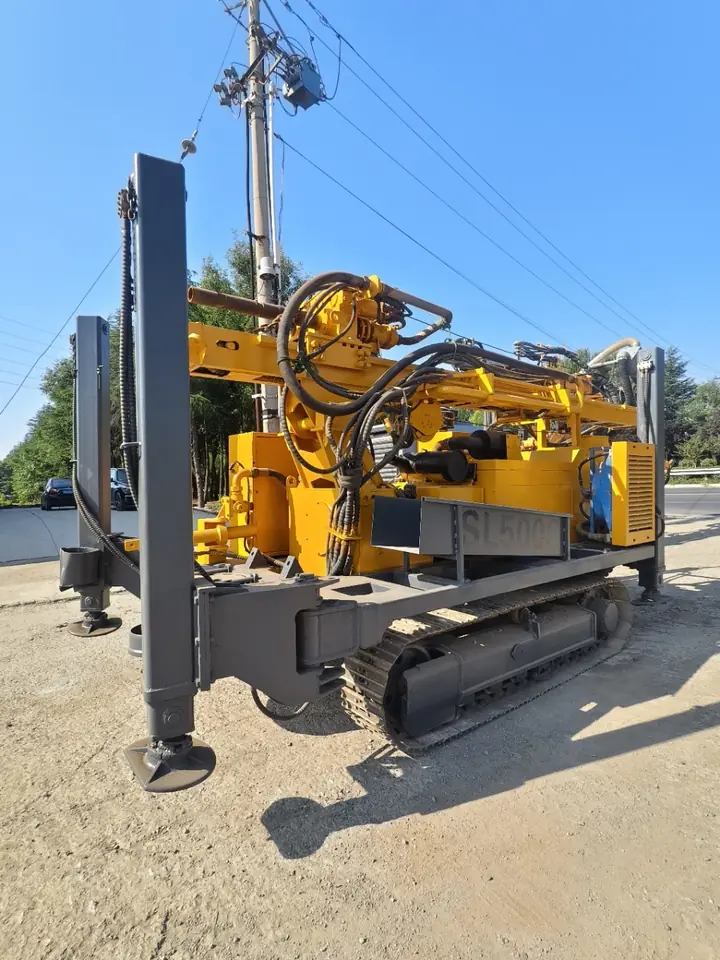
1. Describe the ground sequence and intended completion
Provide nearby drilling logs, expected loose overburden, rock transitions and groundwater information where available. The responsible drilling contractor or well designer should determine how the borehole will be supported and completed. Equipment selection follows that plan. A formation description such as hard rock does not explain the loose material above it, and a shallow unstable interval can still influence the tooling package. We ask for both the target hole and the proposed casing dimensions so that the enquiry describes the well being built rather than just its intended depth.
- Send the formation sequence and proposed well design.
2. Distinguish casing functions and dimensions
State whether the casing is temporary support during drilling, part of a permanent completion, or used in another defined role. Record the specified outside diameter, inside clearance, wall and connection requirements from the design. Tool passage and installation method depend on these details. Do not assume a bit size and finished well diameter are interchangeable. The casing supplier and drilling specialist should confirm the complete dimensional relationship. This is particularly important if you intend to reuse casing or tools already owned by your business.
- Identify casing purpose and the dimensions required by the design.
3. Specify a system, not just a casing bit
Casing-advancement arrangements can include pilot bits, ring bits or other system components, shoes, adapters and casing connections. Compatibility and retrieval procedures are system-specific. Ask the relevant manufacturer or specialist to define the parts needed for the proposed method and ground. Buying a single visible tool without its matching components can leave an incomplete package. We therefore keep the tooling list alongside the machine list and record which components are supplied with the used rig, sourced separately or provided by the buyer.
- Obtain a complete manufacturer-defined component list.
4. Check the rig and support equipment interfaces
Review rotary-head connection, torque and speed range, feed and pullback requirements, rod or casing handling and the machine's permitted operating arrangement. If the method uses compressed air, obtain the relevant tool demand and compare a paired pressure-flow point under the intended conditions. For other circulation methods, include the correct pump and fluid equipment. The engineering assessment belongs to the selected system and project; similar crawler appearance is not evidence that two rigs can use the same casing package.
- Match the casing system to the installed rig and circulation equipment.
5. Quote consumables and handling separately
List casing lengths and connections, drilling tools, replacement wear items, handling aids and any project-specific accessories. Distinguish items left in the well from reusable items because the cost and replenishment plans differ. Include site access and the working space needed to handle the proposed lengths. Ask who provides assembly instructions, training and local support for the selected system. We use this breakdown to make the commercial scope clear and to avoid treating every item shown beside a machine as part of its sale.
- Separate reusable equipment, consumed items and support services.
6. Prepare a water-well package inquiry
Send our sales team the stock ID if you have selected a rig, together with the planned depth, hole and casing diameters, ground information and destination. Add the proposed casing method and any supplier's tooling recommendation you already have. We can discuss a unit-specific package and identify the information needed to price the included equipment. Our water-well method guide explains the broader choice between air and mud circulation; this article helps define the casing part of that package without assuming a particular machine guarantees a finished well.
- Include the casing plan in your water-well equipment request.
Topic decision table: Drilling Through Overburden: Specifying a Casing Equipment Package
| Topic checkpoint | Buyer action | Evidence-based explanation |
|---|---|---|
| 1. Describe the ground sequence and intended completion | Send the formation sequence and proposed well design. | Provide nearby drilling logs, expected loose overburden, rock transitions and groundwater information where available. |
| 2. Distinguish casing functions and dimensions | Identify casing purpose and the dimensions required by the design. | State whether the casing is temporary support during drilling, part of a permanent completion, or used in another defined role. |
| 3. Specify a system, not just a casing bit | Obtain a complete manufacturer-defined component list. | Casing-advancement arrangements can include pilot bits, ring bits or other system components, shoes, adapters and casing connections. |
| 4. Check the rig and support equipment interfaces | Match the casing system to the installed rig and circulation equipment. | Review rotary-head connection, torque and speed range, feed and pullback requirements, rod or casing handling and the machine's permitted operating arrangement. |
Apply this guide to current inventory
- Water Well Drilling Rigs →
- Drilling Rigs →
- Air Compressors →
- Inspection →
- Export planning for Indonesia, the Middle East and Africa →
- Zhengyuan SL500S · CR-069 →
- Linquan LQ-260 · CR-062 →
- Air vs Mud Rotary Drilling: What Should You Buy? →
- Drill Rods and Thread Compatibility: Building a Used Rig Tooling List →
Editorial details and evidence notes
How should the evidence be interpreted?
| Evidence type | What it can support | What it cannot prove |
|---|---|---|
| Official or manufacturer source | The cited family, standard or regulatory statement | The configuration or condition of a listed used unit |
| Published inventory record | Stock ID, supplied fields and linked listing photos | Current availability, hidden condition or included scope |
| Unit inspection evidence | Serial-specific observations within the agreed test scope | Performance outside the tested conditions |
Questions about using this guide
Does this guide prove that a listed machine has the feature or compliance discussed?
No. The guide explains a verification method. Confirm the exact stock ID, serial identity, installed configuration and destination rules before relying on it.
What should a buyer do before requesting a final quote?
Send the stock ID, project requirement, destination and requested inspection scope, then ask for current machine-specific evidence.