What is the difference between top hammer and DTH?
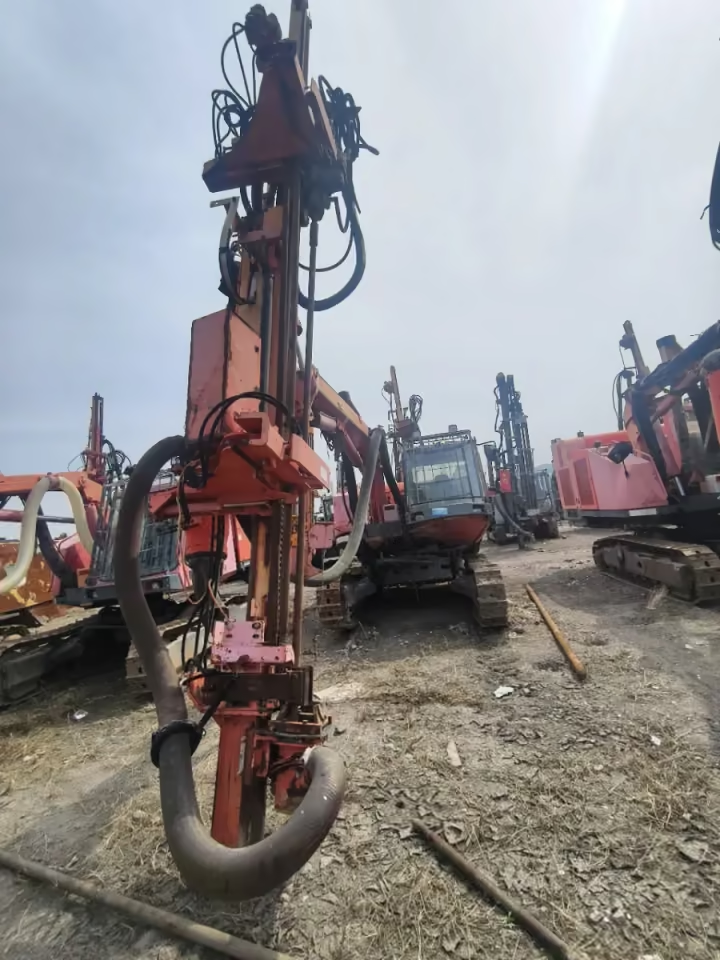
In top hammer drilling, a rock drill above the hole transmits impact through the drill string. A DTH hammer works at the bottom of the hole. Epiroc's surface-drilling reference book explains this distinction. For a buyer, the useful question is which complete arrangement suits the work. A crawler chassis or a familiar brand badge does not identify the drilling method. Ask for the rock drill or hammer identification and a clear view of the feed and tooling before putting machines in the same comparison.
- Record the drilling method beside each stock ID, rather than grouping every crawler rig as DTH.
Start with the hole specification
Prepare one project brief for every supplier: required hole diameter, working depth, ground description, inclination, access constraints and the client's hole-quality criteria. Explain whether the application is quarry production, civil construction or another task. A maximum number in a brochure is not a complete working envelope. A machine that reaches one headline limit may need different tooling or support equipment for your project. Have the person responsible for the drilling plan review the shortlist against actual site requirements before a purchase decision.
- Send the same project brief to each supplier so the responses can be compared directly.
What belongs in the air and tooling package?
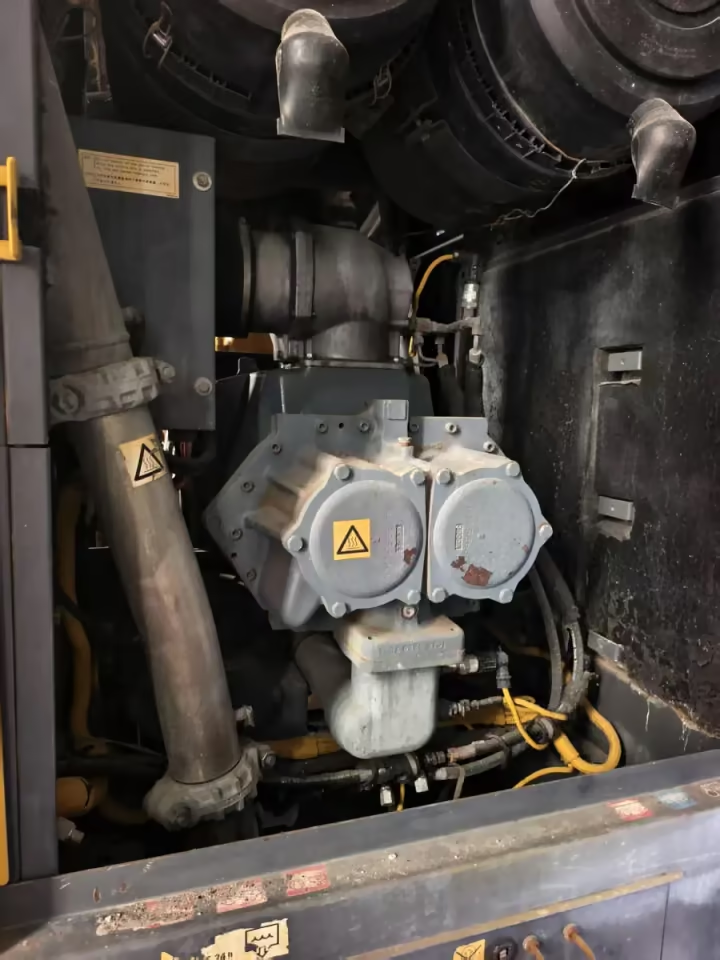
For a DTH candidate, identify the proposed hammer and obtain its manufacturer's air-demand information before selecting the compressor. Epiroc's COP M6 instructions illustrate that compressed air serves the hammer and flushing circuit; this does not establish the needs of every hammer. List the compressor, hoses, connectors, rods and bits included in the offer. For a top hammer candidate, identify the installed rock drill and compatible drill steel. Keep any additional flushing or dust-control equipment in the scope of comparison rather than treating it as an unpriced accessory.
- Use the existing compressor-sizing guide to check the proposed DTH air package.
How should two used machines be compared?
Separate three columns in your shortlist: model-family information, the equipment actually fitted to the stock unit, and the observations recorded during an agreed inspection. This prevents a modern brochure from becoming a claim about an older machine. Compare the feed assembly, rod handling, controls and component identity on that basis. Photographs help establish what is present; a suitable operational test addresses function. Neither a photograph nor a catalogue provides a universal output rate for your rock, operator and tooling.
- Request a configuration list linked to the machine serial number and the seller's stock ID.
Which of our listings can start a shortlist?
We list individual Sandvik DX700 machines and an Epiroc T35 record, among other used surface rigs. Use their stock IDs to distinguish units before discussing suitability. For example, Sandvik DX700 CR-006 and Epiroc T35 CR-034 have separate listing photographs and records. Those pages are useful starting points for a technical discussion, not evidence that either machine is the correct answer to every hole specification. Send the selected stock ID with your project brief and ask for the exact installed configuration.
- Compare CR-006 and CR-034 through their own product pages, then request a unit-specific review.
When is a shortlist ready for a quotation?
A shortlist is ready when each candidate has an identified drilling method, a documented configuration, a complete support-equipment scope and an inspection plan. Compare purchase and preparation costs only after those items are aligned. Where the site requires a capability absent from the offered configuration, either obtain a defined compatible package or remove that candidate. We sell used equipment; this guide does not provide a drilling design or certify a machine. The buyer's project team must verify the exact machine against the intended work.
- Attach the agreed configuration and included-equipment list to the quotation request.
Topic decision table: Top Hammer vs DTH: Choosing a Used Surface Drill Rig
| Topic checkpoint | Buyer action | Evidence-based explanation |
|---|---|---|
| What is the difference between top hammer and DTH? | Record the drilling method beside each stock ID, rather than grouping every crawler rig as DTH. | In top hammer drilling, a rock drill above the hole transmits impact through the drill string. |
| Start with the hole specification | Send the same project brief to each supplier so the responses can be compared directly. | Prepare one project brief for every supplier: required hole diameter, working depth, ground description, inclination, access constraints and the client's hole-quality criteria. |
| What belongs in the air and tooling package? | Use the existing compressor-sizing guide to check the proposed DTH air package. | For a DTH candidate, identify the proposed hammer and obtain its manufacturer's air-demand information before selecting the compressor. |
| How should two used machines be compared? | Request a configuration list linked to the machine serial number and the seller's stock ID. | Separate three columns in your shortlist: model-family information, the equipment actually fitted to the stock unit, and the observations recorded during an agreed inspection. |
Apply this guide to current inventory
- Drilling Rigs →
- Air Compressors →
- Inspection →
- Export planning for Indonesia, the Middle East and Africa →
- Sandvik DX700 · CR-006 →
- Epiroc T35 · CR-034 →
- How to Size a Portable Air Compressor for DTH Drilling: Pressure, Flow and Site Conditions →
- Used Drilling Rig Prices: How to Compare Equipment Quotes →
- Used Drilling Rig Inspection Checklist: 12 Evidence-Based Checks Before You Buy →
Editorial details and evidence notes
How should the evidence be interpreted?
| Evidence type | What it can support | What it cannot prove |
|---|---|---|
| Official or manufacturer source | The cited family, standard or regulatory statement | The configuration or condition of a listed used unit |
| Published inventory record | Stock ID, supplied fields and linked listing photos | Current availability, hidden condition or included scope |
| Unit inspection evidence | Serial-specific observations within the agreed test scope | Performance outside the tested conditions |
Questions about using this guide
Does this guide prove that a listed machine has the feature or compliance discussed?
No. The guide explains a verification method. Confirm the exact stock ID, serial identity, installed configuration and destination rules before relying on it.
What should a buyer do before requesting a final quote?
Send the stock ID, project requirement, destination and requested inspection scope, then ask for current machine-specific evidence.